Journey to Sinai Series Introduction

The Journey to Sinai: Why This Path Matters
“When you have brought the people out of Egypt, you will worship GOD on this mountain.”
Exodus 3:12
The Exodus story is far more than an ancient record of deliverance. It is the divine blueprint of spiritual formation. It represents a pattern GOD still uses to lead His people from bondage into identity, from survival into purpose, and from wandering into covenant. When GOD brought Israel out of Egypt, He did not rush them to the Promised Land. He led them to Sinai. Sinai was always the destination. Not Canaan. Not the wilderness. Not the Red Sea. Not even the miracles. Sinai was the mountain of identity, covenant, and calling. It was the reason for the Exodus. GOD did not simply want to free His people. He wanted to form them. He desired a people who knew who He is, who they are, how to walk with Him, how to carry His presence, how to live as a holy nation, and how to reflect His character to the world.
The journey from Egypt to Sinai is the journey from deliverance to identity. It is the transformation from slavery into sonship, fear into trust, chaos into covenant, survival into purpose, confusion into clarity, and wandering into worship. Every stop along the way is intentional. Every moment carries meaning. Every location becomes a classroom. Every challenge reveals something about GOD. Every test prepares the heart for what comes next. GOD uses the journey to shape people who will stand at the mountain.
This 13-part series is designed to help believers understand the process of spiritual formation. It shows how GOD leads His people step by step and season by season until they are ready to receive identity and purpose. Each location on Israel’s journey reveals a different aspect of GOD’s heart and a different layer of our own. Rameses breaks the power of the old identity. Succoth shelters the fragile heart. Etham teaches trust at the edge. Pi Hahiroth exposes fear and reveals deliverance. The Red Sea buries the past and births identity. Marah heals the wounds of bondage. Elim restores the soul. The Wilderness of Sin teaches daily dependence. Dophkah forms character in hiddenness. Alush strengthens endurance. Rephidim confronts unbelief. Amalek trains for warfare. Sinai reveals identity, covenant, and calling. This is not just Israel’s story. It is our story.
We live in a time when GOD is calling His people back to identity, covenant, and purpose. Many are leaving their own Egypts, stepping away from old cycles, old identities, old wounds, and old assignments. They are entering a season of transition, formation, and rediscovery. This series is meant to serve as a guide, companion, prophetic map, discipleship tool, and a call to deeper formation. It is written to help everyone recognize where they are on the journey and what GOD is forming in them at each stage.
This journey is not only for individuals. It is for families, ministries, and entire churches. These teachings can be used for personal study, small groups, leadership development, men’s ministry, discipleship pathways, spiritual retreats, and even shofar training and activation. Each part stands alone, but together they reveal the full picture of GOD’s process of transformation.
As you walk through these 13 teachings, may you hear the voice of the Lord whispering to your spirit. I brought you out to bring you in. I delivered you to form you. I healed you to reveal you. I am leading you to the mountain because I want you to know who you are. This is the journey to Sinai. This is the journey into identity. This is the journey into purpose.
And now, the journey begins.
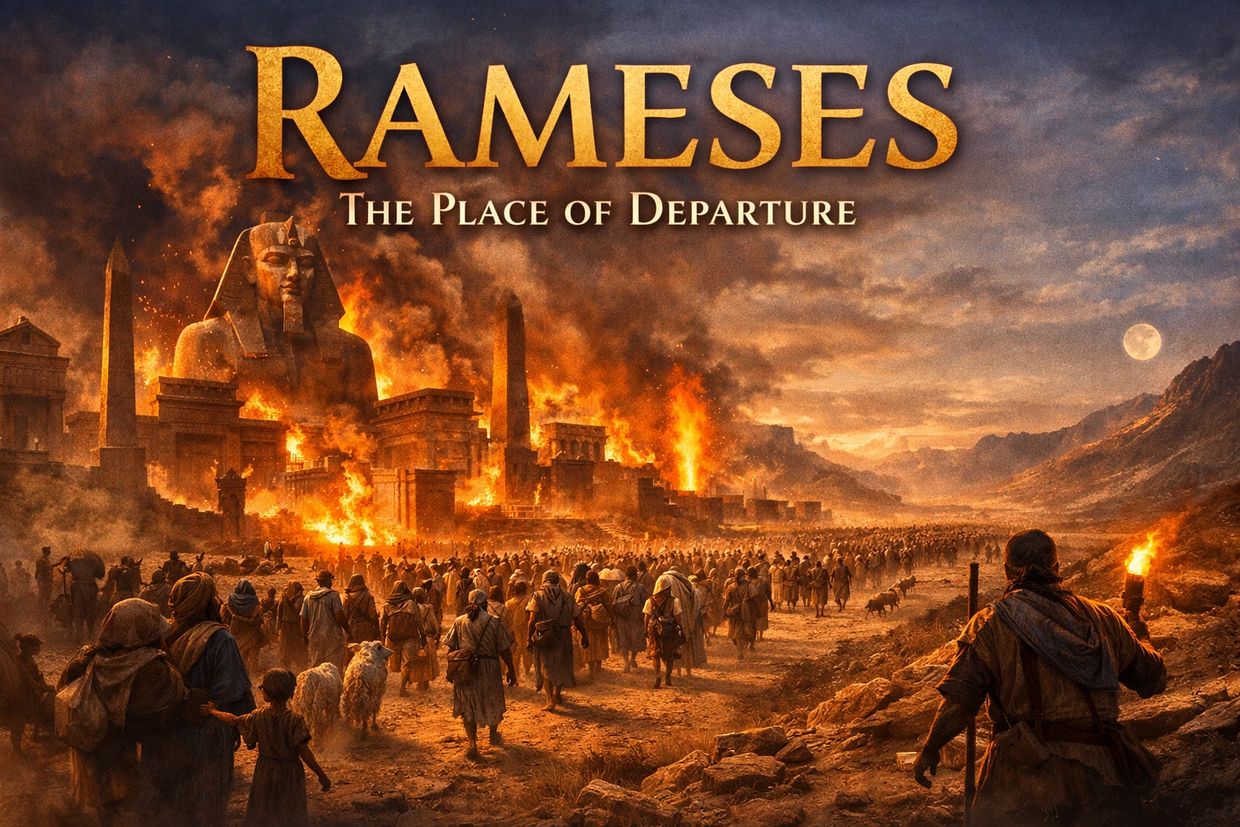
Sinai Series Part 1 | Rameses: The Place of Departure
“Before God leads you forward, He breaks the power of what once held you."
Scripture:
Exodus 12:37
37 Then the children of Israel journeyed from Rameses to Succoth, about six hundred thousand men on foot, besides children.
Theme:
GOD breaks the power of the old before revealing the new.
The Journey Begins Before the First Step
Every journey with GOD begins long before our feet move. It begins in the unseen places where He breaks the power of what once defined us. For Israel, that place was Rameses. Rameses was not just a city; it was the symbol of everything Egypt had built into them. Their identity was shaped by oppression, it was value measured by productivity, and their worth was determined by Pharaoh. It was a place where exhaustion was normalized, and bondage was disguised as stability. Before GOD ever led Israel into the wilderness, He led them out of the system that shaped their identity. This is where the journey to Sinai truly begins. This is where our journey begins.
Rameses in Historical and Cultural Context
Rameses, also called Pi Rameses, was the royal city built by the labor of Israel. It was Pharaoh’s administrative center, a hub of military power, and a symbol of Egyptian dominance. Archaeology shows it was filled with storehouses, chariot depots, and brick-making districts. These were the very places where Israel’s backs were bent and their spirits were crushed. Rameses was the epicenter of Israel's oppression. And yet, this is exactly where GOD begins the Exodus. He didn't begin it in a quiet place, nor in a holy place, and not in a neutral place. But rather He choose to start in the heart of the system that enslaved His people. That's because GOD always begins deliverance at the root of the problem.
The Prophetic Meaning of Rameses
Rameses represents the place where GOD confronts the identity that Egypt built in us. Before Israel could become GOD’s people, they had to stop being Pharaoh’s workforce. Before they could hear GOD’s voice at Sinai, they had to stop hearing Pharaoh’s voice in their heads. Before they could receive covenant, they had to be released from control. Rameses is the place where GOD says, “You will not be ruled by this anymore.” It is the moment when the taskmaster’s voice is broken, the quotas lose their power, the shame of not being enough is silenced, the identity of slavery is severed, and the cycle of striving is interrupted. Rameses is not about movement; it is about liberation of identity.
Rameses as a Spiritual Pattern
Every believer has a Rameses. It is the place where GOD confronts the lies that shaped us. It is where the LORD breaks the systems that controlled us. HE exposes the false identities we carried, ends the season of forced labor, and dismantles the internal Pharaoh. Rameses is the moment when GOD says, “You are leaving this place, but first, this place must lose its hold on you.” This is why deliverance often feels like disruption. GOD is not just removing you from Egypt; He is removing Egypt from you.
The Tension of Leaving What Is Familiar
Israel did not leave Rameses because they were ready. They left because GOD said, “It is time.” Isreal did not have a map, they had no strategy, no clarity, no sense of identity, and no understanding of where they were going. But they had a word. And sometimes, that is all GOD gives us at the beginning. Rameses teaches us that obedience precedes understanding. You don’t get the Sinai revelation until you obey the Rameses command.
The Prophetic Picture of the Passover Night
The departure from Rameses happened immediately after Passover. This is not by accident. Passover is the moment when the blood breaks the power of death, and the Lamb becomes the center. It is the moment when the old system loses its authority, and GOD’s people are marked as His own. Rameses is the first step after the blood. It is the moment when GOD says, “You are Mine now, and because you are Mine, you cannot stay here.” Deliverance is not just freedom from something; it is freedom for something.
The Internal Battle of Rameses
Leaving Rameses is not just physical; it is emotional and spiritual. Israel had to walk away from the only life they had ever known. They had to leave behind the rhythms that shaped them, the identity Egypt imposed, the security of predictability, and the familiarity of bondage. This is why many believers struggle at their own Rameses. Bondage is painful, but it is also familiar. Freedom is glorious, but it comes with so many unknowns. Rameses is the place where GOD asks, “Will you trust Me enough to leave what is familiar, even if you are unsure of where I am taking you?”
The First Step Is Always the Hardest
“The Israelites journeyed from Rameses to Succoth…” (Exodus 12:37). That first step was the most important step they would ever take. It wasn't the Red Sea, nor Marah, not even Sinai. That first step out of Rameses was the most important because the first step breaks the cycle. The first step says, “I am not who Egypt said I was. I am not staying where I was stuck. I am not living under Pharaoh’s voice. I am not defined by my past.” The first step is the declaration of a new identity.
Application: What Is Your Rameses?
Every one of us must ask, "What is the place GOD is calling me to leave?"
It may be a mindset, a habit, a relationship, an old wound, a false identity, a cycle of striving, a place of emotional slavery, or a system that drained your strength. Rameses is the place where GOD says, “This is not who you are anymore.”
Ministry Moment
It's time to identify your Rameses. Once the LORD shows you, then pray and declare, “In Jesus’ name, through the power of HIS blood, the authority of that place is broken. I am free to leave. I am free to begin the journey. I am free to step into who GOD says I am in YESHUA's Name.”
This is the beginning of the journey to Sinai, the journey of becoming the person GOD’ designed you to be.
Conclusion
Rameses is not just a location on a map. It is the first movement of deliverance, the first breath of freedom, the first step toward identity. It is where GOD breaks the power of the old so He can reveal the new. And every journey with GOD begins the same way, with a step out of Rameses.
Shalom and Blessings in Yeshua's name.
Return to the Sinai Series Home
You can return to the Sinai Series Home Table of Contents by clicking the link below.
Come back anytime to continue exploring the Journey to Sinai, and how each of us will take that journey in our walk with the LORD.
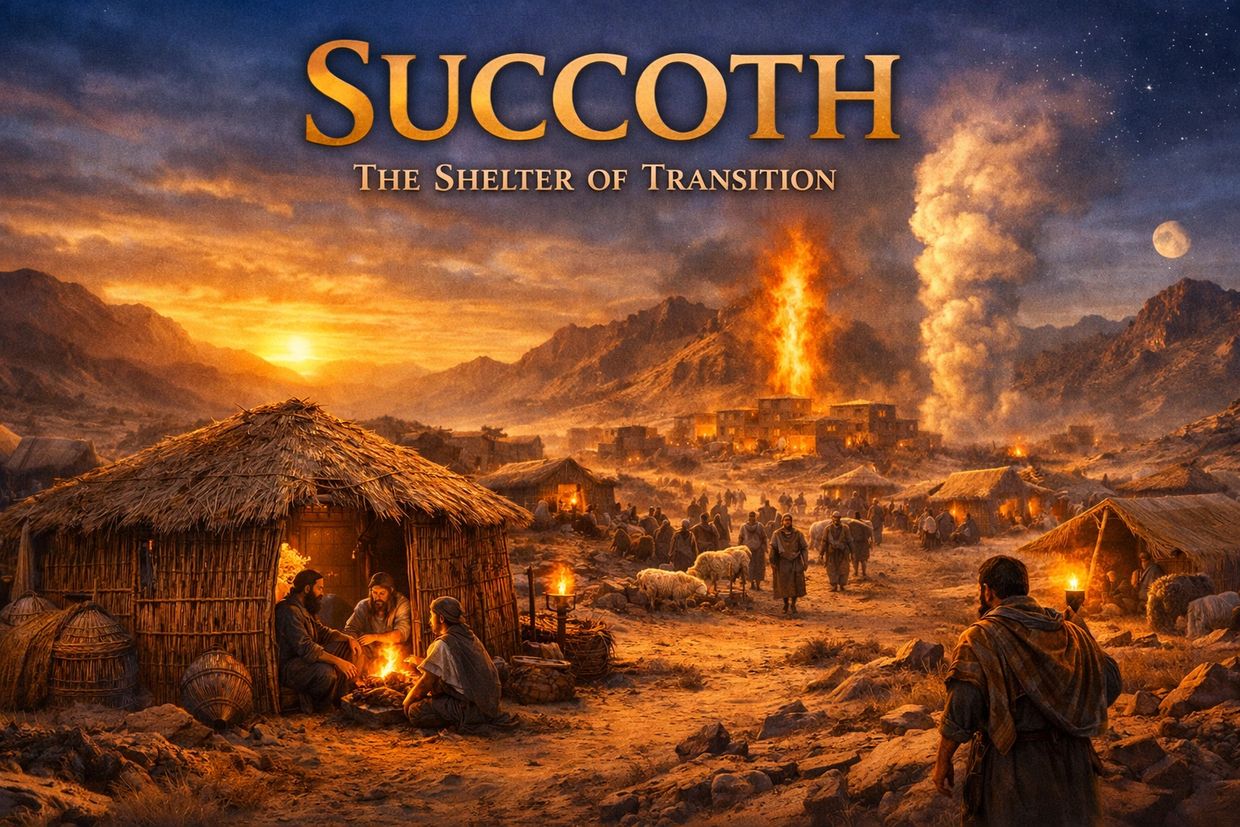
Sinai Series Part 2 | Succoth: The Shelter of Transition
“Before God leads you forward, He breaks the power of what once held you."
Scripture:
Exodus 12:37
37 Then the children of Israel journeyed from Rameses to Succoth, about six hundred thousand men on foot, besides children.
Theme:
GOD gives covering before He gives clarity.
The First Breath of Freedom
Israel’s first step out of Rameses was a step out of bondage. Their second step, into Succoth, was a step into transition. Succoth is the place where GOD says, “You are free, but you are not yet formed.” It is the space between what GOD brought His people out of and what He is preparing them for. Succoth represents the grace of GOD meeting the weakness of His people in the earliest moments of freedom.
Succoth in Historical and Cultural Context
The name Succoth means booths, temporary shelters, or woven huts. In the ancient Near East, these were makeshift dwellings. They were quickly assembled shelters used by travelers or during harvest and migration. Succoth was not a city of permanence, it was a resting place, a holding place, a breathing place. Israel had just left the most structured, controlled, and oppressive system in the ancient world. They had no national identity, no military, no government, no strategy, and no understanding of the wilderness ahead. So GOD brought them to Succoth, a place of temporary protection.
The Prophetic Meaning of Succoth
Succoth represents the season where GOD provides covering without completion. It is the moment when GOD says, “You don’t have to be strong yet. You don’t have to understand everything yet. You don’t have to have a plan yet. You don’t have to be ready for Sinai yet.” Succoth is the grace of transition, because it is the place where GOD gives shelter, rest, space, recovery, and time to breathe. It is the mercy of GOD saying, “I will not rush your formation.”
Succoth as a Spiritual Pattern
Every believer experiences Succoth. It is the season after deliverance but before identity. It is that small pause between breakthrough and clarity. Succoth is the time after leaving bondage, but before we understand purpose. It is the place where GOD teaches His people how to rest, how to trust, how to breathe again. HE teaches us how to live without taskmasters, how to exist without quotas, and how to walk without fear. Succoth is the detox of the soul.
The Emotional Reality of Transition
Leaving Egypt was dramatic. Succoth was quiet. And sometimes the quiet is harder than the crisis. At Succoth, Israel faced the shock of freedom, the disorientation of change, the uncertainty of the future, and the vulnerability of not knowing what comes next. Succoth is the place where GOD says, “Let Me stabilize you before I stretch you.”
Succoth and the Cloud of Glory
It was at Succoth that the pillar of cloud and fire first appeared (Exodus 13:20–22). This was not accidental. Succoth is the place where GOD establishes His presence, His leadership, His nearness, His guidance, and His protection. The cloud and fire were not just signs, they were covering. Succoth teaches that GOD’s presence is not a reward for maturity, but rather a beautiful gift for the journey.
The Prophetic Picture of Temporary Shelters
Succoth is a prophetic picture of seasons of transition, healing, recalibration, and rebuilding. It is the place where GOD slows His people down and reconstructs their inner world. Succoth is not the beginning or the destination; it is the place between. GOD is just as intentional in the “between” as He is in the beginning or the end.
The Tension of Temporary Places
Succoth is temporary, and that is the point. GOD does not want His people to settle in transition. He wants them to rest, but HE does not want them to take up root. Succoth teaches that not every season is permanent, not every shelter is meant to become a structure, and not every resting place is meant to become a home. Succoth is the place where GOD says, “Rest here, but don’t build here.”
Application: What Is Your Succoth?
Every believer must ask, "Where is GOD giving me temporary shelter while He heals and reorients me?" Succoth may look like a season of rest, a pause between assignments, a time of healing after warfare, a moment of recalibration, or a season where GOD says, “not yet.”
Succoth is not weakness, it is wisdom. It is the place where GOD says, “You are free, now let Me restore you.”
Ministry Moment
You are invited to reflect on their own Succoth season. May the Lord cover you in your transition. May He give rest, clarity, and healing. May His presence be your shelter and His cloud your guide. Succoth is the grace of GOD meeting His people in the fragile moments of freedom.
Conclusion
Succoth is not a place of arrival, but rather a place of alignment. It is where GOD says, “Rest before you run. Heal before you fight. Receive before you obey. Let Me cover you before I call you.” Succoth is the shelter of transition, the gentle beginning of formation.
Shalom and Blessings in Yeshua's name.
Return to the Sinai Series Home
You can return to the Sinai Series Home Table of Contents by clicking the link below.
Come back anytime to continue exploring the Journey to Sinai, and how each of us will take that journey in our walk with the LORD.
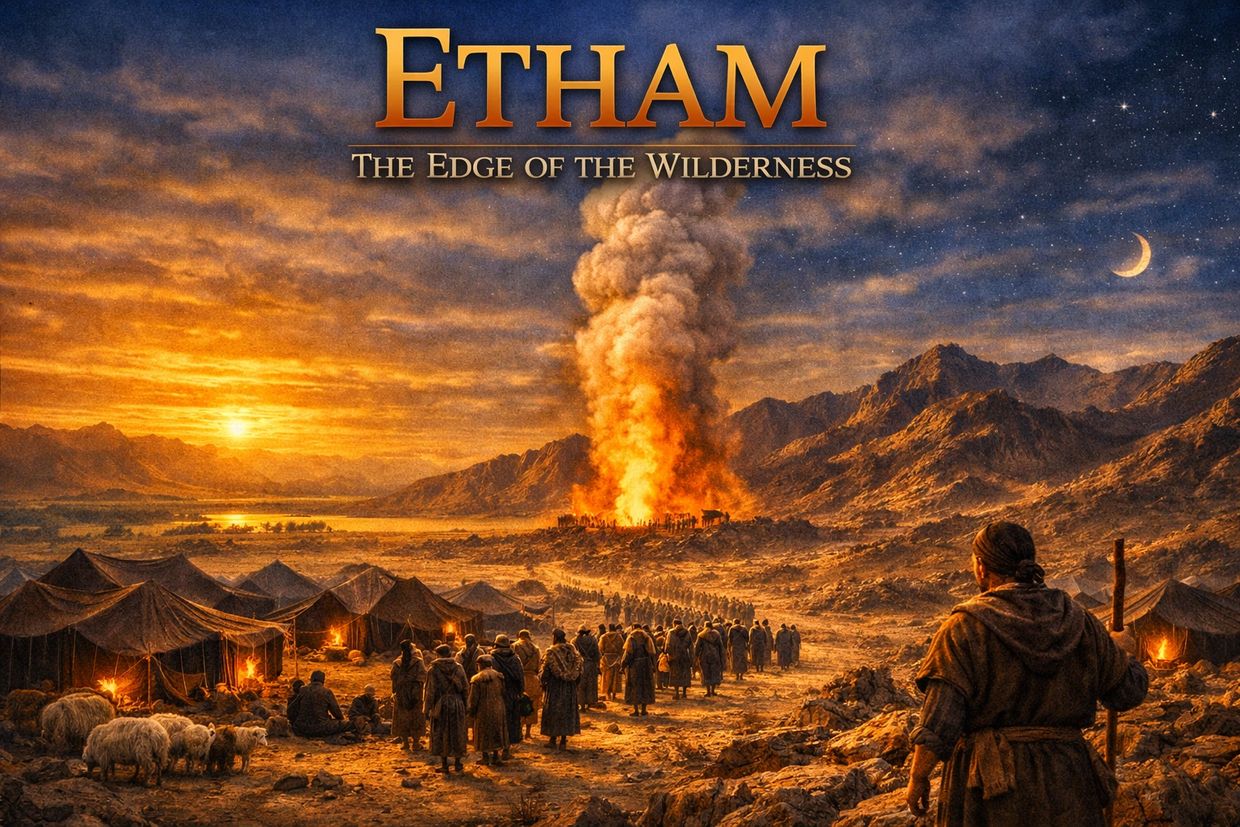
Sinai Series Part 3 | Etham: The Edge of the Wilderness
“From this point on, I lead, you follow.”
Scripture:
Exodus 13:17-21
17 Then it came to pass, when Pharaoh had let the people go, that God did not lead them by way of the land of the Philistines, although that was near; for God said, “Lest perhaps the people change their minds when they see war, and return to Egypt.” 18 So God led the people around by way of the wilderness of the Red Sea. And the children of Israel went up in orderly ranks out of the land of Egypt.
19 And Moses took the bones of Joseph with him, for he had placed the children of Israel under solemn oath, saying, “God will surely visit you, and you shall carry up my bones from here with you.”
20 So they took their journey from Succoth and camped in Etham at the edge of the wilderness. 21 And the Lord went before them by day in a pillar of cloud to lead the way, and by night in a pillar of fire to give them light, so as to go by day and night.
Theme:
GOD leads His people to the edge, so they learn to follow His presence.
The Border Between Familiar and Unknown
Etham stands as one of the most significant stops in the Exodus journey, not because of what happened there, but because of where it was. Etham was the borderland. It was the last edge of Egypt and the first edge of the wilderness. It marked the line between the known and the unknown. At Etham, GOD brought His people to a point of no return and said, “From here on, you follow Me.” It was the moment when deliverance became discipleship.
Etham in Historical and Cultural Context
Etham was located on the eastern frontier of Egypt, a liminal zone between civilization and wilderness, structure and uncertainty, human control and divine leadership. Ancient borderlands were places of vulnerability, exposure, transition, and decision. Etham was not a city; it was a threshold into the unknown. Israel had left Rameses, the place of bondage. They had rested at Succoth, the place of transition. Now they stood at Etham, the edge of obedience.
The Prophetic Meaning of Etham
Etham represents the moment when GOD leads His people to the edge of everything they understand and asks them to trust His presence more than their past. Etham is where GOD says, “You cannot go back. You cannot stay here. You must follow Me forward.” It is the place where faith becomes movement. It is where the familiar is behind, and the unknown is before us. The only certainty is GOD’s presence. Etham is the threshold of trust.
The Cloud and Fire Become the Compass
At Etham, Scripture records, “The LORD went before them by day in a pillar of cloud and by night in a pillar of fire, so that they could travel by day and night” (Exodus 13:21). This was the first time in Scripture that GOD’s presence became visible guidance. Why here? Because Etham was the place where maps no longer worked, logic no longer led, experience no longer applied, and familiarity no longer comforted. Etham was where GOD said, “From this point on, I will lead, so you will follow.” The cloud and fire were not merely signs of His presence; they were invitations to trust.
Etham as a Spiritual Pattern
Every believer encounters Etham. It is the moment when GOD calls His people into something bigger than their understanding and leads them into a season they cannot predict. It is where The LORD asks them to trust Him without full explanation. Etham is where GOD removes the illusion of control and becomes the only compass. It is the place where GOD says, “You don’t need clarity, you need Me.”
The Emotional Reality of the Edge
Standing at Etham would have stirred deep emotions in Israel. It would have stirred excitement, fear, uncertainty, vulnerability, anticipation, and confusion. They had never been this far from Egypt, nor this close to the unknown. Etham is the place where GOD confronts the human desire for predictability, safety, control, and familiarity, and replaces it with presence, guidance, trust, and surrender. Etham is where GOD says, “Let Me lead you into what you cannot yet see.”
Etham and the Wilderness
The wilderness was not a punishment. It becomes a classroom. Etham was the doorway into that classroom. The wilderness would teach Israel dependence, identity, worship, obedience, trust, and covenant. But before GOD could teach them, He had to lead them into the wilderness. Etham is the moment where GOD says, “The wilderness is not your enemy, it is your formation.”
The Divine Detour
From Etham, GOD did something unexpected: “GOD did not lead them by the way of the Philistines but turned them back toward the Red Sea” (Exodus 13:17–18). This means GOD intentionally avoided the easy route and led them into a harder path. This brought them to what seemed like a dead end. Why? Because GOD was not leading them to a destination. He was leading them into transformation. Etham teaches that GOD’s leadership is not always logical, but it is always intentional.
Application: What Is Your Etham?
Every believer must ask, "Where is The LORD bringing me to the edge of the familiar so I can learn to follow Him more deeply?" Etham may look like a new assignment, a major transition, a step of faith, a calling that feels beyond readiness, a season without clear answers, or a place where GOD removes old supports. Etham is not a threat because it is an invitation. It is the place where GOD says, “Let Me lead you into your future.”
Ministry Moment
You are invited to identify your Etham, that place where GOD is calling you to trust Him beyond your understanding. May the Lord lead you with His cloud by day and His fire by night. May you have courage to follow Him into the unknown. May His presence be your compass and His voice your direction. Etham is the threshold of trust, the doorway into formation.
Conclusion
Etham is not a place of arrival; it is a place of decision. It is where GOD brings His people to the edge of everything familiar and says, “Follow Me. Trust Me. Let Me lead you.” Etham is the moment where deliverance becomes discipleship and where the journey of covenant understanding begins.
Shalom and Blessings in Yeshua's name.
Return to the Sinai Series Home
You can return to the Sinai Series Home Table of Contents by clicking the link below.
Come back anytime to continue exploring the Journey to Sinai, and how each of us will take that journey in our walk with the LORD.
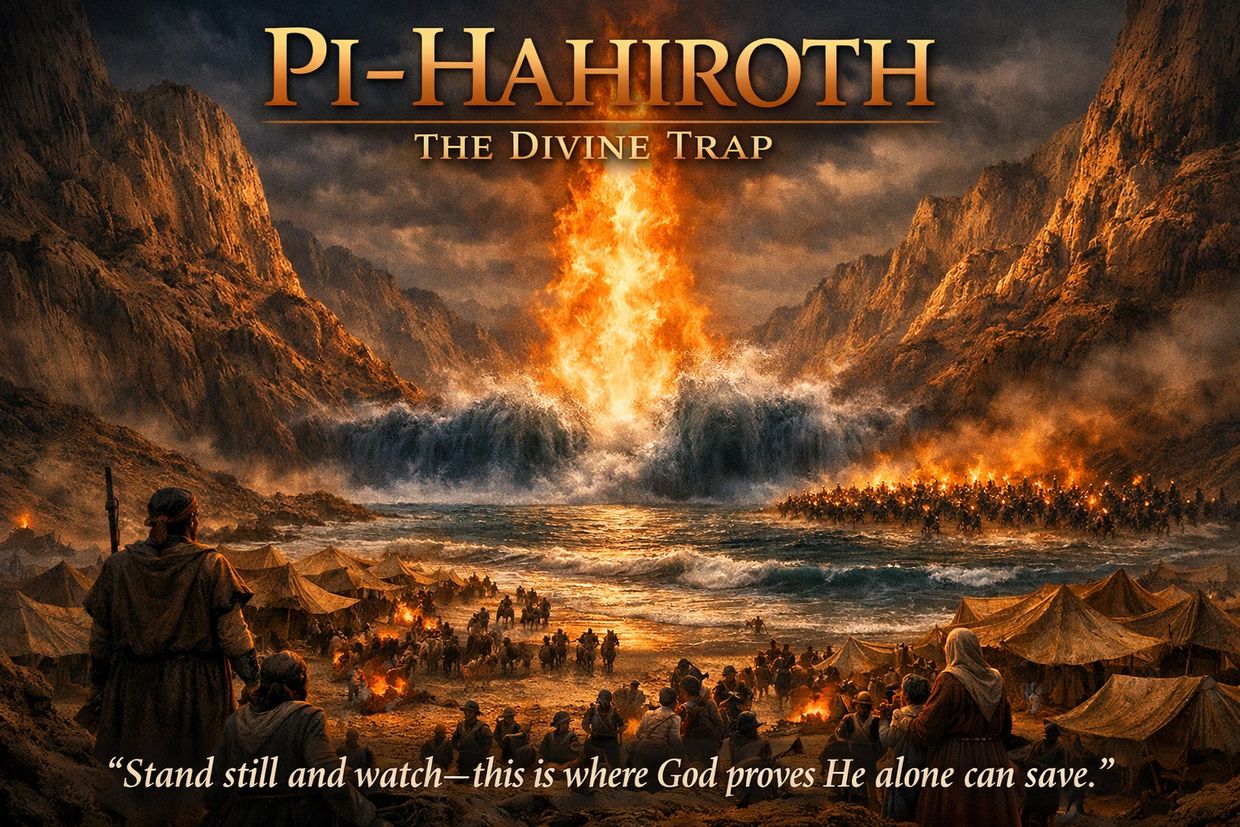
Sinai Series Part 4 | Pi Hahiroth: The Devine Trap
“Stand still and watch. This is where God proves He alone can save.”
Scripture:
Exodus 14:1-4
1 Now the Lord spoke to Moses, saying: 2 “Speak to the children of Israel, that they turn and camp before Pi Hahiroth, between Migdol and the sea, opposite Baal Zephon; you shall camp before it by the sea. 3 For Pharaoh will say of the children of Israel, They are bewildered by the land; the wilderness has closed them in.’ 4 Then I will harden Pharaoh’s heart, so that he will pursue them; and I will gain honor over Pharaoh and over all his army, that the Egyptians may know that I am the Lord.” And they did so.
Theme:
GOD sometimes leads His people into impossible places to reveal impossible deliverance.
When GOD Leads You Into a Corner
Pi Hahiroth is one of the most misunderstood locations in the Exodus story. It is the place where GOD leads Israel into a situation that looks like a strategic disaster. There are mountains on one side, desert on another, the sea in front, and Pharaoh’s army behind. There was no escape, no strategy, no options, no way out. And yet, this is exactly where GOD wanted HIS people. Pi Hahiroth is the place where GOD says, “I will deliver you in a way that leaves no doubt who saved you.”
Pi Hahiroth in Historical and Cultural Context
The name Pi Hahiroth means “mouth of the gorges,” “place of narrowness,” or “entrance to the canal.” It was a geographical choke point and natural trap. Ancient Egyptian military strategy relied heavily on terrain, and Pharaoh knew this region well. He knew Israel was boxed in with no escape route. From a human perspective, Pi Hahiroth was the worst possible place to camp. But GOD told them to camp there. He did not tell them to pass through it, avoid it. He didn't say to circle around it. HE said to camp there, settle in, and stay a while. GOD was saying "Wait for Me." Pi Hahiroth is the place where GOD intentionally removes every human solution.
The Prophetic Meaning of Pi Hahiroth
Pi Hahiroth represents the seasons when GOD leads His people into situations that expose fear, dependence, lack of control, and the need for Him. It is the place where GOD says, “I will deliver you in a way that leaves no room for self-rescue.” Pi Hahiroth is not punishment, it is preparation. It is the place where GOD sets the stage for a miracle that will define identity.
The Divine Setup
GOD tells Moses, “Pharaoh will say, ‘They are entangled in the land; the wilderness has shut them in.’ And I will harden Pharaoh’s heart…” (Exodus 14:3–4). This means GOD knew exactly what Pharaoh would think, how he would respond, and how the situation would unfold. GOD orchestrated the entire moment and used Pharaoh’s pride as part of His plan. Pi Hahiroth is not a mistake; it is a divine setup. GOD leads Israel into a trap not to destroy them, but to destroy the enemy that pursued them.
The Emotional Reality of Being Cornered
Israel’s reaction is deeply human. They panic and are full of fear, accusation, regret, and confusion. They cry out, “Was it because there were no graves in Egypt that you brought us out here to die?” (Exodus 14:11). This is the language of people who feel trapped. Pi Hahiroth exposes the fear beneath the surface and the unbelief that is still in the heart. It exposes the longing for the familiar, and the fragility of early freedom. GOD brings His people to Pi Hahiroth not to shame them. HE did it to reveal what still needs healing.
Moses’ Prophetic Declaration
In the midst of panic, Moses speaks one of the most powerful statements in Scripture: “Do not be afraid. Stand still, and see the salvation of the LORD… The LORD will fight for you; you need only to be still.” (Exodus 14:13–14). This is the heart of Pi Hahiroth. It is when we stop striving, stop panicking, stop trying to fix it, stop trying to escape, and stop trying to control the outcome. It is when we stand still and watch GOD fight. Pi Hahiroth is the place where GOD says, “Let Me be your deliverer.”
The Red Sea Was Not the Miracle, Pi Hahiroth Was
The miracle of the Red Sea begins at Pi Hahiroth. The miracle is not the parting of the waters but rather the positioning. GOD positions His people where they cannot go back, cannot go around, cannot go through, and cannot save themselves. Pi Hahiroth is the miracle of divine orchestration. The Red Sea is simply the manifestation.
Pi Hahiroth and the Wilderness of the Heart
Pi Hahiroth is not just a location but is also a spiritual condition. It is the place where GOD confronts the fear of abandonment, failure, the unknown, inadequacy, and loss of control. Pi Hahiroth is where GOD says, “Your fear cannot follow you into your calling.” He brings it to the surface not to condemn us but to heal us.
Application: What Is Your Pi Hahiroth?
Every one of us must ask, "Where has GOD positioned me in that place that feels impossible, not to destroy me, but to deliver me?" Pi Hahiroth may look like a situation with no clear solution. It may be a financial corner, a relational crisis, a calling that feels too big, or a season where every option is gone. Pi Hahiroth is not the end. It is the setup. It is that place where GOD is saying, “Watch what I am about to do.”
Ministry Moment
You are invited to identify your Pi-Hahiroth, the place where you feel trapped or overwhelmed. May the Lord fight for you. May every enemy pursuing you be defeated. May you stand still and see the salvation of your GOD. May the trap the enemy set become the place of deliverance. Pi Hahiroth is the place where GOD reveals His power in a way that defines identity forever.
Conclusion
Pi Hahiroth is not a mistake, not a failure, and not a setback. It is the place where GOD positions His people, protects them, exposes the enemy, reveals His glory, destroys what pursued them, and leads them into the miracle. Pi Hahiroth is the divine trap. It is the place where GOD removes every human option so He can reveal Himself as the only answer.
Shalom and Blessings in Yeshua's name.
Return to the Sinai Series Home
You can return to the Sinai Series Home Table of Contents by clicking the link below.
Come back anytime to continue exploring the Journey to Sinai, and how each of us will take that journey in our walk with the LORD.
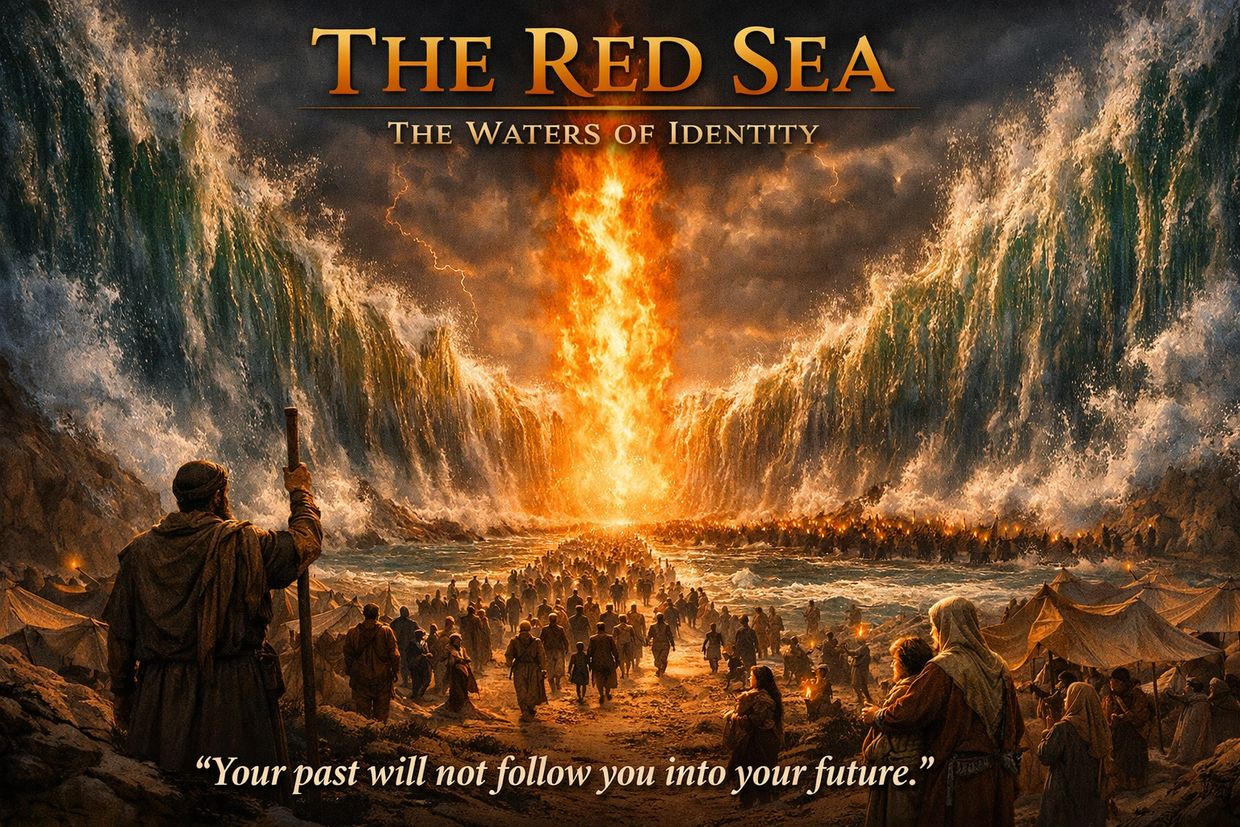
Sinai Series Part 5 | The Red Sea: The Waters of Identity
“Your past will not follow you into your future.”
Scripture:
Exodus 14:14-21
14 The Lord will fight for you, and you shall hold your peace.”
15 And the Lord said to Moses, “Why do you cry to Me? Tell the children of Israel to go forward. 16 But lift up your rod, and stretch out your hand over the sea and divide it. And the children of Israel shall go on dry ground through the midst of the sea. 17 And I indeed will harden the hearts of the Egyptians, and they shall follow them. So I will gain honor over Pharaoh and over all his army, his chariots, and his horsemen. 18 Then the Egyptians shall know that I am the Lord, when I have gained honor for Myself over Pharaoh, his chariots, and his horsemen.”
19 And the Angel of God, who went before the camp of Israel, moved and went behind them; and the pillar of cloud went from before them and stood behind them. 20 So it came between the camp of the Egyptians and the camp of Israel. Thus it was a cloud and darkness to the one, and it gave light by night to the other, so that the one did not come near the other all that night.
21 Then Moses stretched out his hand over the sea; and the Lord caused the sea to go back by a strong east wind all that night, and made the sea into dry land, and the waters were divided.
Theme:
Deliverance becomes identity when the old life is buried behind you.
The Waters That Change Everything
The Red Sea is one of the most iconic events in Scripture, but it is far more than a dramatic escape. It is the moment where GOD transforms a group of former slaves into a people who belong to Him. The Red Sea is not just about getting Israel out of Egypt; it is about getting Egypt out of Israel. It is the moment where GOD says, “Your past will not follow you into your future.”
The Red Sea in Historical and Cultural Context
The Red Sea crossing was a direct confrontation with Pharaoh, Egypt’s military power, Egypt’s GODs, and Egypt’s worldview. In the ancient world, the sea represented chaos, death, the unknown, and the realm of divine power. Egypt believed their gods controlled the waters. Pharaoh believed he controlled Israel. The Red Sea became the perfect stage for GOD to declare, “I alone am GOD.” This was not just a miracle; it was a cosmic declaration.
The Prophetic Meaning of the Red Sea
The Red Sea represents baptism, rebirth, identity shift. It symbolizes the burial of the old life, and the beginning of a new creation. Paul writes, “They were all baptized into Moses in the cloud and in the sea” (1 Corinthians 10:2). The Red Sea is the moment where Israel’s identity changes from slaves to sons, from property to people, from oppressed to chosen, and from pursued to protected. The Red Sea is the water of identity.
The Moment Before the Miracle
Before the waters part, GOD does something profound: “The angel of GOD moved behind them” (Exodus 14:19). The cloud shifts from leading to protecting. GOD stands between His people and their past, blocks the enemy’s access, and shields them in their most vulnerable moment. The Red Sea teaches that GOD protects His people even when they cannot protect themselves.
Moses’ Staff and the Stretching of Faith
GOD tells Moses, “Lift up your staff, stretch out your hand over the sea…” (Exodus 14:16). This is not magic, it is partnership. GOD could have parted the sea without Moses, but He chooses to involve him because GOD forms leaders through obedience. HE trains faith through action, and releases miracles through partnership. The Red Sea is where GOD says, “I will do the impossible, but you must stretch your faith.”
The Waters Part: A Path No One Expected
Scripture says, “The LORD drove the sea back by a strong east wind all night” (Exodus 14:21). This was not a sudden flash but was a process. All night long the wind blew, the waters shifted, the path formed, and the miracle unfolded. Sometimes GOD’s deliverance is instant; sometimes it is progressive. Both are miraculous. The Red Sea teaches that GOD is working even when His people cannot yet see the full picture.
The Walk Through the Waters
Israel walked through the sea with walls of water on both sides. Imagine the emotions the people must have been feeling. Awe, fear, wonder, trembling, disbelief, hope. This was not just a pathway. It was a birth canal. Israel was passing from death to life, slavery to freedom, old identity to new identity. The Red Sea is the moment where GOD says, “Walk through what I have opened for you.”
The Enemy Follows, and Is Buried
Pharaoh’s army pursues Israel into the sea. The enemy could follow Israel into the water, but the enemy could not follow Israel out of the water. When the waters collapse, the chariots sink, the horses drown, the soldiers perish, and the threat ends. The Red Sea is where GOD says, “The enemy you see today, you will never see again” (Exodus 14:13). The Red Sea is the burial place of what once pursued GOD’s people.
The Red Sea and the Wilderness of the Heart
The Red Sea is not just a historical event because it sets up a spiritual pattern. It is the moment where GOD breaks the power of the past, severs the authority of old identities, destroys generational bondage, ends cycles of oppression, and closes doors no one can reopen. The Red Sea is the place where GOD says, “Your past ends here.”
Application: What Is Your Red Sea?
Every one of us must ask, "What is the place where GOD is calling me to walk forward so He can bury what has pursued me?" Your Red Sea may be a step of obedience, or maybe moment of surrender. Could it be a decision that closes the door to the past, or breakthrough that requires courage. It could possibly even be a place where GOD says “move forward” even when it looks impossible. The Red Sea is not the place of fear. It is the place of final freedom.
Ministry Moment
You are invited to identify your Red Sea, that place where GOD is calling you to move forward so He can bury the past. May the Lord part the waters before you. May every enemy pursuing you be drowned. May you walk through the waters of identity and emerge as the person GOD has called you to be. The Red Sea is the moment where GOD ends the old and begins the new.
Conclusion
The Red Sea is not just a miracle. It is a defining moment. It is where GOD protects, parts, leads, delivers, transforms, and redefines. The Red Sea is the waters of identity, and the place where GOD says, “You are Mine. Your past is buried. Your future is open. Walk forward.”
Shalom and Blessings in Yeshua's name.
Return to the Sinai Series Home
You can return to the Sinai Series Home Table of Contents by clicking the link below.
Come back anytime to continue exploring the Journey to Sinai, and how each of us will take that journey in our walk with the LORD.
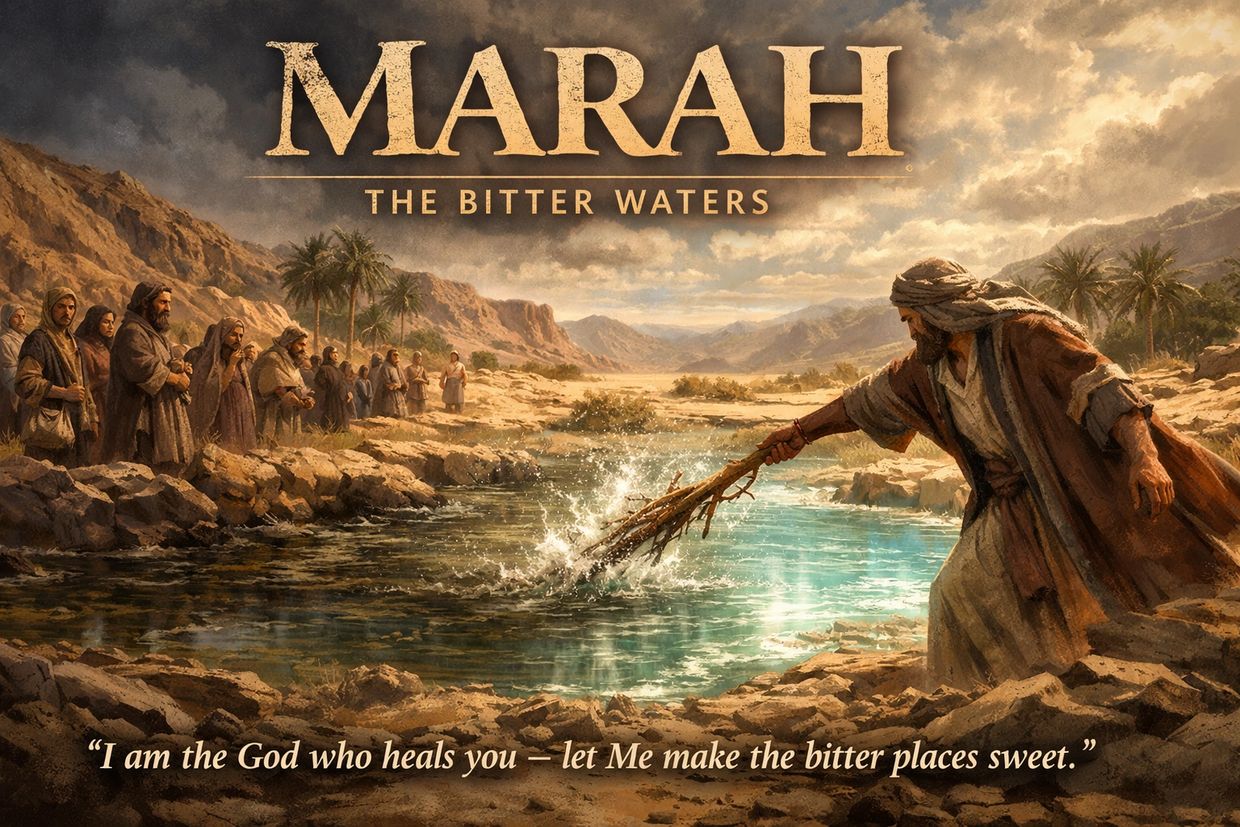
Sinai Series Part 6 | Marah: The Bitter Waters
“I am the God who heals you. Let Me make the bitter places sweet.”
Scripture:
Exodus 15:22-26
22 So Moses brought Israel from the Red Sea; then they went out into the Wilderness of Shur. And they went three days in the wilderness and found no water. 23 Now when they came to Marah, they could not drink the waters of Marah, for they were bitter. Therefore the name of it was called Marah. 24 And the people complained against Moses, saying, “What shall we drink?” 25 So he cried out to the Lord, and the Lord showed him a tree. When he cast it into the waters, the waters were made sweet. There He made a statute and an ordinance for them, and there He tested them, 26 and said, “If you diligently heed the voice of the Lord your God and do what is right in His sight, give ear to His commandments and keep all His statutes, I will put none of the diseases on you which I have brought on the Egyptians. For I am the Lord who heals you.”
Theme:
GOD reveals bitterness so He can heal it.
Freedom Reveals What Bondage Hid
Israel had just experienced the greatest miracle in human history. The Red Sea had closed behind them and Pharaoh was gone. Their past was buried and the people were singing. But, just three days later, the celebration ended abruptly because there was no water, no shade, no relief, and they had no strength left. When the people finally found water, it was bitter and could not be drank. Marah is the moment where GOD reveals that “Freedom exposes what bondage concealed.” The bitterness was not only in the water; it was in the people as well. The LORD brought HIS people to Marah to heal what Egypt had planted in them.
Marah in Historical and Cultural Context
Marah means “bitter.” In the ancient world water was life. Bitter water was not just unpleasant, it was deadly. Israel had walked three days in the desert. They were dehydrated, exhausted, emotionally raw, physically weak, and spiritually vulnerable. Marah was a crisis of survival, but it was also a crisis of identity. Because Marah exposed what was still inside them. It revealed fear, distrust, trauma, disappointment, and unresolved wounds. Marah is where GOD brings the heart to the surface.
The Prophetic Meaning of Marah
Marah represents the moment when GOD allows His people to encounter something bitter so He can reveal the bitterness within them. Marah is not punishment, but rather a diagnosis. It is the place where GOD says, “I am not just delivering your body, I am healing your heart.” Marah exposes unhealed trauma, buried pain, old wounds, internalized lies, and emotional residue from past seasons. GOD brings His people to Marah because HE does not want them to carry bitterness into their destiny.
The People Complain, Not Because of Water, But Because of Wounds
Scripture says, “The people grumbled against Moses…” (Exodus 15:24). This is the first recorded complaint after the Red Sea. Why? Because Marah touches the place where hope feels dangerous, trust feels risky, disappointment feels familiar, and fear feels justified. Marah is where the heart says, “What if GOD doesn’t come through? What if I’m abandoned again? What if this freedom isn’t real? What if I’m not safe?” Marah is not about water, but rather about wounds.
Moses Cries Out, and GOD Reveals the Tree
In response to the people’s bitterness, Moses does something different: “Moses cried out to the LORD” (Exodus 15:25). GOD shows him a tree. He doesn't show him a technique, a formula, a strategy, but a tree. Moses throws the tree into the water, and the water becomes sweet. This is a prophetic imagery. The tree prophetically represents, and foreshadows, the cross that Yeshua would bare for all of us. It represents the healing, redemption, transformation, and divine intervention that is only made possible through Yeshua. Marah teaches that bitterness is healed when the cross of Yeshua is applied to the wound.
The Tree and the Cross
The early church saw Marah as a prophetic picture of Yeshua. The bitter waters represent sin, trauma, brokenness, generational wounds, and emotional residue. The tree represents the cross, the sacrifice, the healing power of GOD, and the transformation of what is bitter into what is sweet. Marah is the moment where GOD says, “My healing is greater than your history.”
Marah and the Wilderness of the Heart
Marah is not just a location, but a spiritual experience. It is the place where GOD confronts bitterness, resentment, unforgiveness, disappointment, trauma, and emotional exhaustion. Marah is where GOD says, “I will not let bitterness define you.” He reveals it so He can remove it.
GOD Makes a Covenant of Healing
After healing the waters, GOD makes a declaration: “I am the LORD who heals you” (Exodus 15:26). This is the first time GOD reveals Himself as Yahweh Rapha, the GOD who heals. Not the GOD who punishes, not the GOD who shames, not the GOD who condemns, but the GOD who heals. Marah is the birthplace of GOD’s healing identity.
Application: What Is Your Marah?
Each of us must ask, "Where is GOD allowing me to encounter bitterness so He can heal the deeper wound?: Marah may look like a painful memory resurfacing, or a disappointment thought buried, or a relationship that triggers old wounds. Maybe it's a situation that exposes fear, or a moment where trust feels difficult. Marah is the beginning of healing. It is the place where GOD says, “Let Me heal what you’ve carried for too long.”
Ministry Moment
You are invited to identify your Marah, the place where bitterness, disappointment, or old wounds have surfaced, and allow the LORD to heal you. May the cross be applied to every bitter place. May the Lord heal every wound Egypt left behind. May the waters of your heart become sweet again. May Yahweh Rapha reveal Himself to you. Marah is the place where GOD heals the heart so His people can move forward whole.
Conclusion
Marah is a sacred appointment. It is where GOD reveals, confronts, heals, restores, and transforms. Marah is the place where GOD says, “I am the GOD who heals you. Let Me make the bitter places sweet.”
Shalom and Blessings in Yeshua's name.
Return to the Sinai Series Home
You can return to the Sinai Series Home Table of Contents by clicking the link below.
Come back anytime to continue exploring the Journey to Sinai, and how each of us will take that journey in our walk with the LORD.
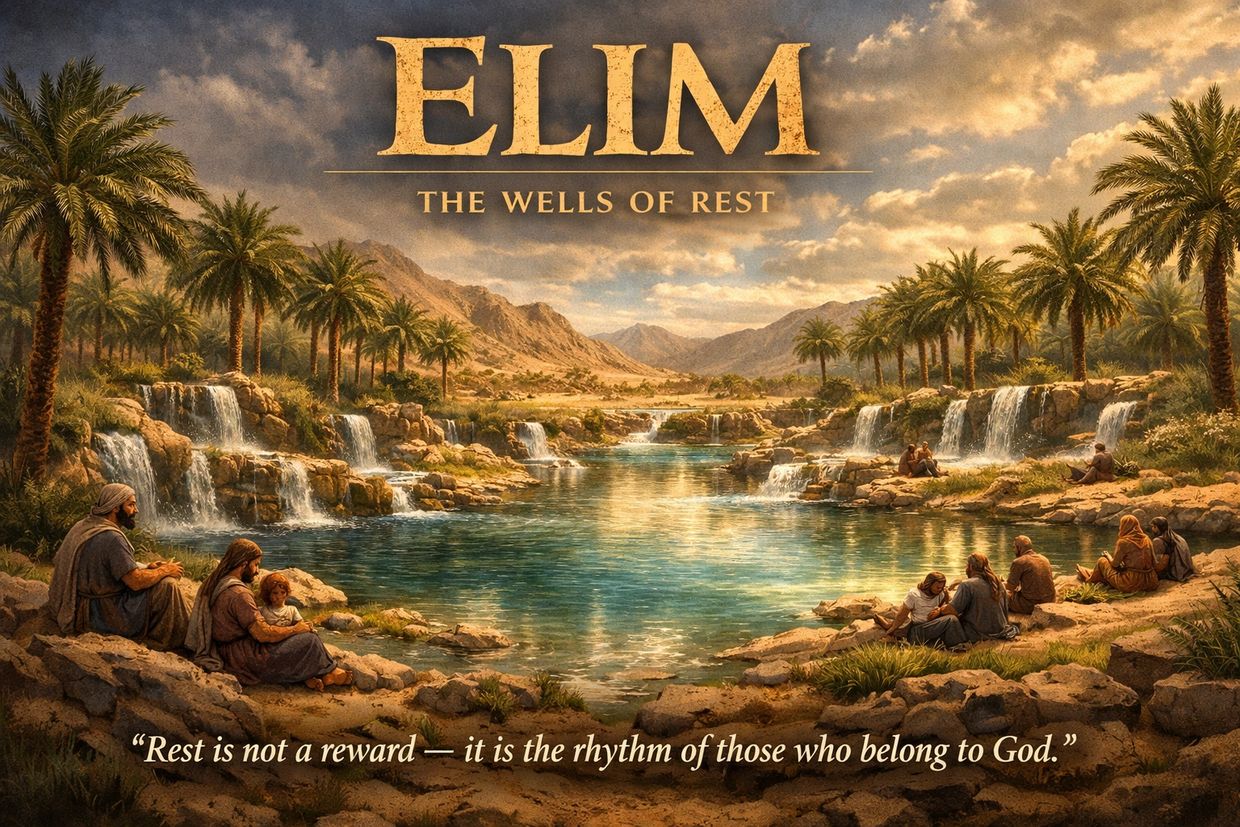
Sinai Series Part 7 | Elim: The Wells of Rest
“Rest is not a reward; it is the rhythm of those who belong to God.”
Scripture:
Exodus 15:27
27 Then they came to Elim, where there were twelve wells of water and seventy palm trees; so they camped there by the waters.
Theme: GOD gives rest, not as a reward, but as a rhythm.
After Bitterness Comes Blessing
Marah was the place of bitter waters, the place where GOD exposed and healed the wounds Egypt left behind. But GOD never ends a healing moment with emptiness. He always follows healing with restoration. So immediately after Marah, GOD leads His people to Elim. Elim is the place where GOD says, “I will not only heal you, but I will also refresh you.” It is the place where GOD restores strength, renews joy, and rebuilds the soul.
Elim in Historical and Cultural Context
Elim was an oasis, a rare and precious gift in the harsh desert. Scripture describes it simply as, “They came to Elim, where there were twelve springs and seventy palm trees, and they camped there by the water.” (Exodus 15:27) This is not poetic exaggeration. This is literal abundance. Twelve springs, one for each tribe and seventy palms which is a number that symbolizes nations, leadership, and completeness. Elim was lush, shaded, abundant, restful, and refreshing. In the ancient world, an oasis was a place of shelter, community, recovery, celebration, and renewal. Elim was GOD’s intentional provision.
The Prophetic Meaning of Elim
Elim represents the season where GOD brings His people into rest, refreshment, and recovery after a season of testing. Elim is the place where GOD says: “Rest is not weakness.” “Rest is not optional.” “Rest is part of your formation.” “Rest is My gift to you.” Elim is the Sabbath of the journey. It is the moment where GOD teaches His people, “You cannot walk with Me without learning to rest in Me.”
Elim as a Spiritual Pattern
Every believer experiences Elim. Elim is the season where GOD restores what was depleted, refreshes what was exhausted, strengthens what was weakened, renews what was discouraged, and breathes life into what was weary. Elim is not the reward for faithfulness. Elim is the rhythm of faithfulness. GOD does not give rest because you earned it. He gives rest because you need it.
The Contrast Between Marah and Elim
Marah and Elim sit side by side in the narrative, and the contrast is intentional. Marah: bitter, painful, revealing, confronting, healing. Elim: sweet, refreshing, restful, abundant, restoring. GOD brings His people to Marah to heal them. He brings them to Elim to restore them. Marah exposes the wound while Elim restores strength. Marah reveals the heart, but Elim renews the soul. Marah is necessary while Elim is essential.
The Symbolism of Twelve Springs
The twelve springs represent the twelve tribes, the completeness of GOD’s provision, the unity of GOD’s people, and the sufficiency of GOD’s supply. Each tribe had its own spring, which means there was no competition, no scarcity, no striving, no fear of lack. Elim teaches that GOD’s provision is personal, abundant, and sufficient.
The Symbolism of Seventy Palms
The seventy palm trees represent the seventy nations listed in Genesis 10, the seventy elders of Israel, the fullness of GOD’s blessing, and the shade of GOD’s covering. Palms in Scripture symbolize victory, righteousness, flourishing, and celebration. Elim is the place where GOD says, “I am not only your healer, but I am also your rest.”
Elim and the Wilderness of the Heart
Elim is not just a location but is also a spiritual experience. It is the place where GOD invites His people to breathe, rest, recover, reflect, worship, and enjoy His presence. Elim is the place where GOD says, “You are not a slave anymore, you can rest without fear.” This is important. Slaves do not rest but sons do. Elim is where GOD begins to teach His people the rhythm of sonship.
Application: What Is Your Elim?
All of us must ask, " Where is GOD inviting me into rest, recovery, and renewal?" Elim may look like a season of peace after warfare, a moment of clarity after confusion, a time of refreshing after healing, or place where GOD restores joy. It could be that pause before the next assignment, or a space where GOD says, “stay awhile.” Elim is not a distraction. Elim is preparation. It is the place where GOD says, “Rest here, because the journey continues.”
Ministry Moment
We invite you to seek the LORD and identify your Elim. recognize that place where GOD is inviting you to rest and be restored. May the Lord bring you into your Elim. May He refresh your soul, restore your strength, and renew your joy. May His provision be abundant and His rest be your portion. Elim is the place where GOD restores what the journey has drained.
Conclusion
Elim is not the destination. It is the rest stop on the way to destiny. It is where GOD refreshes, restores, renews, strengthens, and stabilizes. Elim is the place where GOD says, “Rest in Me, because I am leading you forward.”
Shalom and Blessings in Yeshua's name.
Return to the Sinai Series Home
You can return to the Sinai Series Home Table of Contents by clicking the link below.
Come back anytime to continue exploring the Journey to Sinai, and how each of us will take that journey in our walk with the LORD.
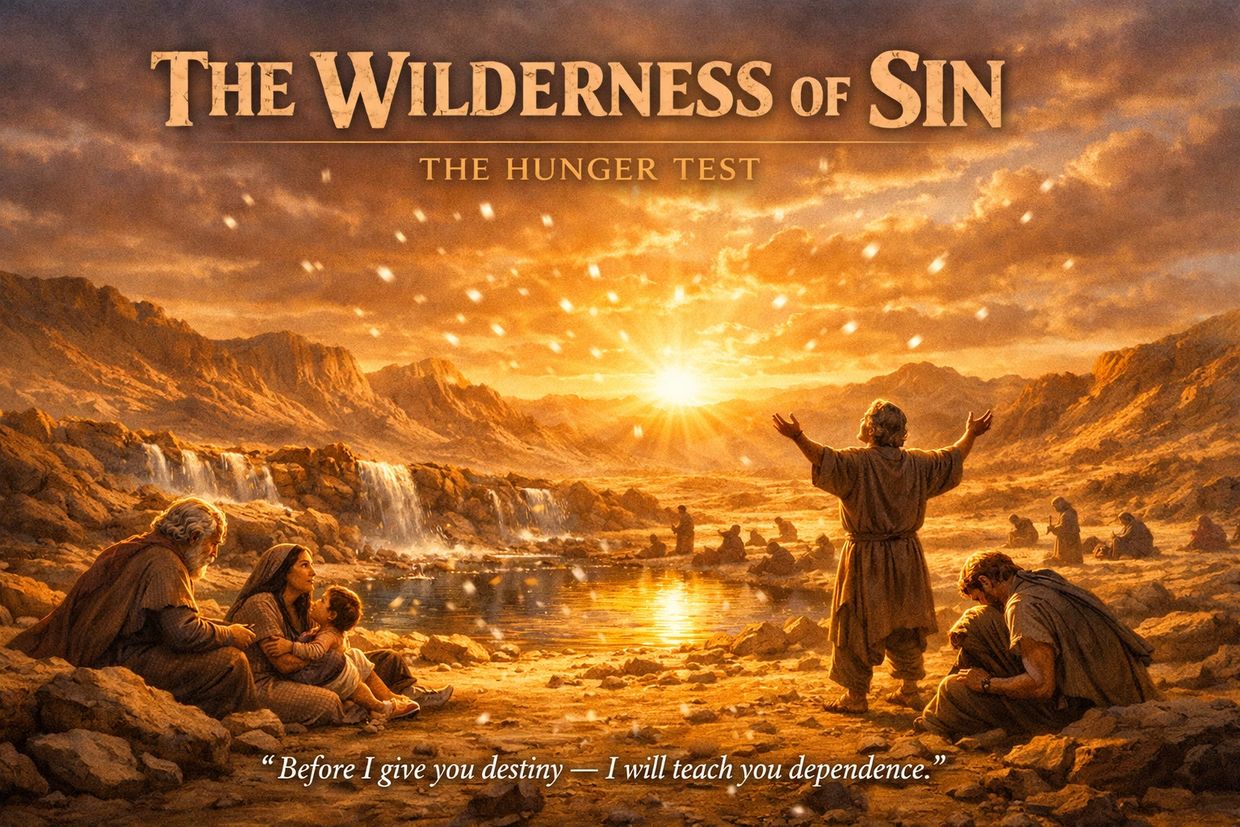
Sinai Series Part 8 | Wilderness of Sin: The Hunger Test
“Before I give you destiny, I will teach you dependence.”
Scripture:
Exodus 16:1-9
1 And they journeyed from Elim, and all the congregation of the children of Israel came to the Wilderness of Sin, which is between Elim and Sinai, on the fifteenth day of the second month after they departed from the land of Egypt. 2 Then the whole congregation of the children of Israel complained against Moses and Aaron in the wilderness. 3 And the children of Israel said to them, “Oh, that we had died by the hand of the Lord in the land of Egypt, when we sat by the pots of meat and when we ate bread to the full! For you have brought us out into this wilderness to kill this whole assembly with hunger.”
4 Then the Lord said to Moses, “Behold, I will rain bread from heaven for you. And the people shall go out and gather a certain quota every day, that I may test them, whether they will walk in My law or not. 5 And it shall be on the sixth day that they shall prepare what they bring in, and it shall be twice as much as they gather daily.”
6 Then Moses and Aaron said to all the children of Israel, “At evening you shall know that the Lord has brought you out of the land of Egypt. 7 And in the morning you shall see the glory of the Lord; for He hears your complaints against the Lord. But what are we, that you complain against us?” 8 Also Moses said, “This shall be seen when the Lord gives you meat to eat in the evening, and in the morning bread to the full; for the Lord hears your complaints which you make against Him. And what are we? Your complaints are not against us but against the Lord.”
9 Then Moses spoke to Aaron, “Say to all the congregation of the children of Israel, Come near before the Lord, for He has heard your complaints.’ ”
Theme:
GOD teaches dependence before He teaches destiny.
When Hunger Reveals the Heart
Israel leaves Elim, the oasis of abundance, and immediately enters the Wilderness of Sin. The shift is jarring as the people move from shade to scorching heat, from springs to sand, from abundance to emptiness, from rest to hunger. Hunger does something profound in our lives. It reveals what we trust. The Wilderness of Sin is the place where GOD says, “Before I bring you to Sinai, I must teach you to depend on Me.”
The Wilderness of Sin in Historical and Cultural Context
The “Wilderness of Sin” is not related to the English word sin but comes from the Hebrew root associated with Sinai. It was a barren, rocky, inhospitable region between Elim and Sinai. In the ancient world, wilderness regions were unpredictable, dangerous, resource-scarce, physically draining, and mentally disorienting. Israel enters this wilderness one month after leaving Egypt (Exodus 16:1). The adrenaline of deliverance has faded, the excitement of freedom has settled, and the novelty of the journey has worn off. Now reality hits. The Wilderness of Sin is where GOD confronts the question: “Will you trust Me when you cannot see provision?”
The Prophetic Meaning of the Wilderness of Sin
The Wilderness of Sin represents the season where GOD removes the familiar sources of provision so He can become the source. It is the place where GOD says: “I will feed you Myself. I will sustain you Myself. I will teach you to trust Me daily.” The Wilderness of Sin is not about deprivation but builds dependence. It is the place where GOD trains His people to live by His voice, His timing, His provision, and His rhythm. The Wilderness of Sin is the school of trust.
Hunger Exposes the Heart
Scripture says, “The whole congregation grumbled against Moses and Aaron…” (Exodus 16:2). At its root this is not about food, but more about fear. Hunger exposes insecurity, anxiety, unbelief, nostalgia for the past, and distrust of GOD’s goodness. Israel said, “We sat by the pots of meat in Egypt…” (Exodus 16:3). This is the language of people who romanticize bondage, fear lack, distrust freedom, crave predictability, and struggle with uncertainty. The Wilderness of Sin reveals this portion of internal Egypt that still needs to be healed.
GOD Responds With Provision, Not Punishment
Notice how GOD responds. He does not rebuke them or shame them. He does not punish them. Instead, He says, “I will rain bread from heaven for you…” (Exodus 16:4). This is astonishing! GOD responds to complaint with compassion, to fear with provision, and to unbelief with faithfulness. The Wilderness of Sin teaches that GOD’s provision is not based on our perfection but is based on His character.
Manna: The Bread of Dependence
GOD gives Israel manna, a supernatural provision that appears every morning. Manna teaches several truths:
- GOD provides daily. They could not store it or hoard it. Manna teaches us that “You cannot live today on yesterday’s provision.”
- GOD provides personally. Every household gathered exactly what they needed, no more, no less. Manna teaches us that “GOD knows your portion.”
- GOD provides faithfully. Every morning, without fail, the manna appeared. Manna teaches us that “You can trust My rhythm.”
- GOD provides differently. Manna was unlike anything they had ever seen. Manna teaches us that the LORD is saying “My provision may not look like what you expect.”
The Quail: GOD Meets Physical Need
In the evening, GOD sends quail, meat for the people. This is important. GOD meets both the physical need (meat) and the spiritual need (manna). The Wilderness of Sin teaches that GOD cares about the whole person, body, soul, and spirit.
The Sabbath Principle Begins Here
The Wilderness of Sin is where GOD introduces the Sabbath rhythm. On the sixth day, they gather twice as much; on the seventh day, no manna falls. This is the first time in Scripture that GOD commands rest before Sinai. GOD is teaching His people to trust His timing, rest in His provision, stop striving, and live in His rhythm. The Wilderness of Sin is the birthplace of Sabbath.
The Wilderness of Sin and the Wilderness of the Heart
The Wilderness of Sin is not just a location. It is a spiritual experience. It is the place where GOD confronts fear of lack, fear of the future, fear of uncertainty, fear of disappointment, and fear of dependence. The Wilderness of Sin is where GOD says, “Let Me teach you to trust Me one day at a time.”
Application: What Is Your Wilderness of Sin?
Every person must ask ‘Where is GOD teaching me to trust Him daily?” Your Wilderness of Sin may look like financial uncertainty, a season without clarity, a place where GOD removes old supports, a time where you must trust Him day by day, a moment where you cannot see the full path, or a season where GOD says, “Depend on Me.” The Wilderness of Sin is a place of preparation. It is the place where GOD says, “I am teaching you to trust My provision.”
Ministry Moment
You are invited to identify your Wilderness of Sin. What is that place where GOD is trying to teach you daily dependence. Allow the LORD to minister to you and may HE give you daily bread. May He meet every need. May He break the fear of lack. May He teach you to trust His rhythm and rest in His provision. The Wilderness of Sin is the place where GOD trains each of us to live by His voice.
Conclusion
The Wilderness of Sin becomes a classroom where GOD teaches dependence, establishes rhythm, reveals His faithfulness, breaks fear, forms trust, and prepares His people for covenant. The Wilderness of Sin is the place where GOD says, “Before I give you destiny, I will teach you dependence.”
Shalom and Blessings in Yeshua's name.
Return to the Sinai Series Home
You can return to the Sinai Series Home Table of Contents by clicking the link below.
Come back anytime to continue exploring the Journey to Sinai, and how each of us will take that journey in our walk with the LORD.
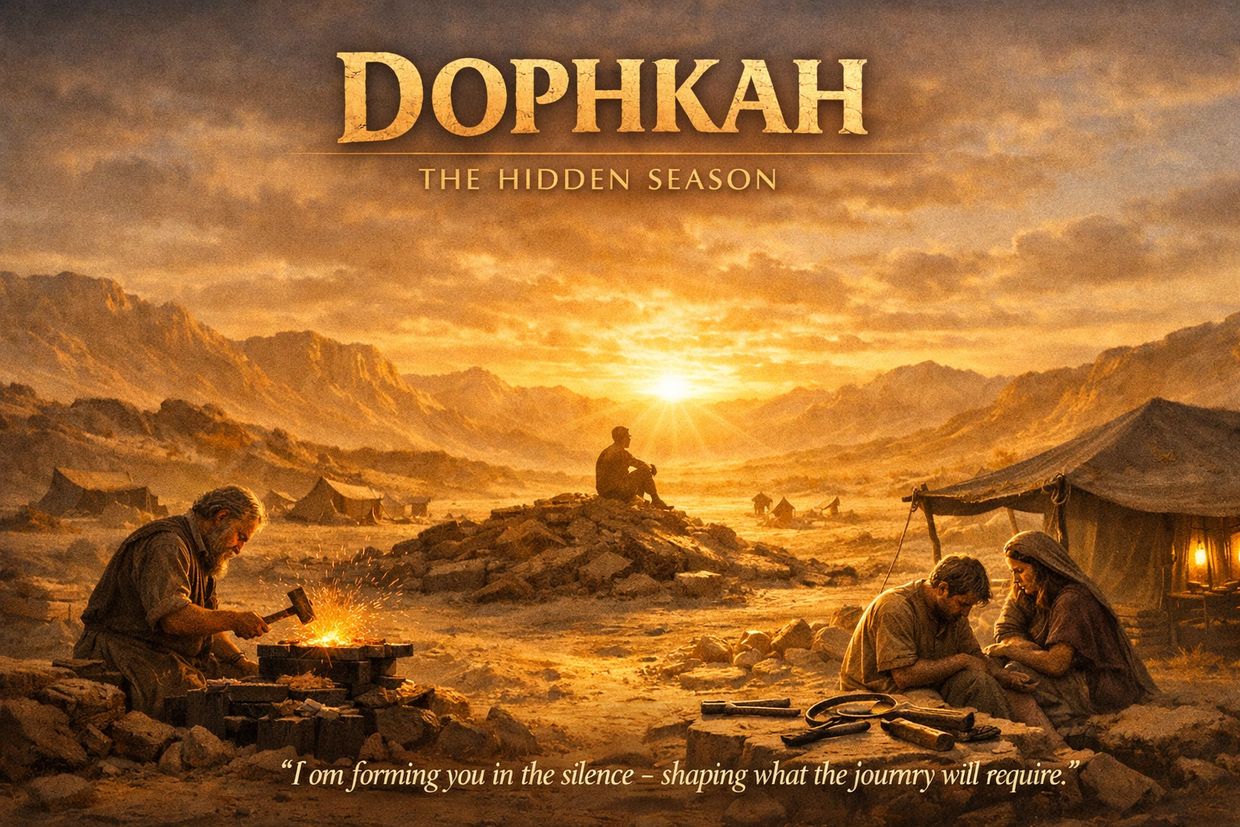
Sinai Series Part 9 | Dophkah: The Hidden Season
“I am forming you in the silence, shaping what the journey will require.”
Scripture:
Numbers 33:12
12 They journeyed from the Wilderness of Sin and camped at Dophkah.
Theme:
GOD forms character in the places Scripture barely mentions.
When GOD Works in the Quiet
Some places in the Exodus story are dramatic, like the Red Sea, Marah, and Sinai. Others are deeply emotional, like Pi Hahiroth and the Wilderness of Sin. But then there are places like Dophkah, which is simply a name, a location, a stop on the journey, and nothing more. There was no miracle. There was no crisis or complaint. There wasn't even any revelation. nor instruction, nor drama. Just a quiet, uneventful stop. And yet, Dophkah is essential because it represents the seasons when GOD forms us in silence. It is the place where GOD says, “I am working in you even when nothing seems to be happening.”
Dophkah in Historical and Cultural Context
Dophkah appears only once in Scripture: “They journeyed from the wilderness of Sin and camped at Dophkah” (Numbers 33:12). That’s it. No details. No description. No events. The name Dophkah likely derives from a root meaning “to knock,” “to beat,” or “to hammer.” This suggests a place associated with metalworking, shaping, forging, and refining. Even the name hints at formation. Dophkah is where GOD shapes His people quietly, steadily, and intentionally.
The Prophetic Meaning of Dophkah
Dophkah represents seasons when nothing dramatic happens, nothing seems to change, nothing feels spiritual, and nothing feels significant. Yet these seasons are crucial because Dophkah is where GOD strengthens foundations, deepens roots, stabilizes identity, forms character, builds endurance, and teaches consistency. Dophkah is the place where GOD says, “I am forming you when you feel nothing.”
The Silence of Scripture Is the Message
The fact that Scripture says nothing about Dophkah is intentional. Dophkah is the season when GOD is quiet, life is ordinary, the journey feels repetitive, the days feel uneventful, and the heart feels unchanged. But silence does not mean absence. Stillness does not mean inactivity. Ordinary does not mean unimportant. Dophkah teaches us that GOD does some of His deepest work in seasons that feel uneventful.
The Journey Between Sin and Dophkah
Israel had just left the Wilderness of Sin, a place of hunger, fear, and daily dependence. They were learning to trust GOD, to receive manna, to follow the cloud, and to rest on the Sabbath. Dophkah is the season when those lessons become habits. It is the place where trust becomes a rhythm, obedience becomes normal, dependence becomes a lifestyle, and faith becomes steady. Dophkah is the place where GOD says, “Let Me stabilize what I’ve taught you.”
The Hidden Work of Formation
In Dophkah, GOD is not giving new revelation. He is strengthening the revelation already given. He is not performing dramatic miracles but is forming internal maturity. He is not confronting major issues but simply cultivating quiet faithfulness. Dophkah is the season where GOD builds consistency, resilience, patience, steadiness, and quiet obedience. These qualities are not formed in dramatic moments but rather are formed in the ordinary days.
The Wilderness of the Heart
Dophkah also represents a spiritual experience. It is the place where GOD invites His people to walk faithfully without emotional highs, to trust Him without dramatic signs, to obey Him without immediate reward, and to follow Him without constant reassurance. Dophkah is where GOD says, “Maturity is built in the mundane.”
The Hammering of Identity
If the name Dophkah truly conveys “hammering” or “forging,” the prophetic picture becomes clear: Dophkah is the forge. It is the place where GOD hammers out old patterns, where HE shapes new identity, strengthens weak places, refines character, and tempers faith. Forging is not loud. Forging is repetitive, intentional, and transformative. Dophkah is the forge of the soul.
Application: What Is Your Dophkah?
Every believer must ask themselves, "Where is GOD forming me quietly, without drama or emotion?" Your Dophkah may look like a season of routine, an ordinary job, a time when prayer feels dry, a place where nothing seems to change, a stretch when GOD feels silent, or a moment when you feel unseen. Dophkah is not a delay because the LORD is using it to develop you. It is the place where GOD is forming you for what comes next.
Ministry Moment
You are invited to identify your Dophkah, that quiet, hidden season in which GOD is forming you. As HE ministers to you, may the Lord strengthen you in the quiet places. May He forge your character, deepen your roots, and steady your steps. May you recognize His work even in the silence. Dophkah is where GOD forms what the journey will require.
Conclusion
Dophkah is not dramatic. It is not emotional. It is not loud. But it is essential. It is where GOD forms, shapes, strengthens, stabilizes, and prepares. Dophkah is the hidden season, the quiet forge of the journey. It is the place where GOD says, “Let Me shape you in the silence.”
Shalom and Blessings in Yeshua's name.
Return to the Sinai Series Home
You can return to the Sinai Series Home Table of Contents by clicking the link below.
Come back anytime to continue exploring the Journey to Sinai, and how each of us will take that journey in our walk with the LORD.
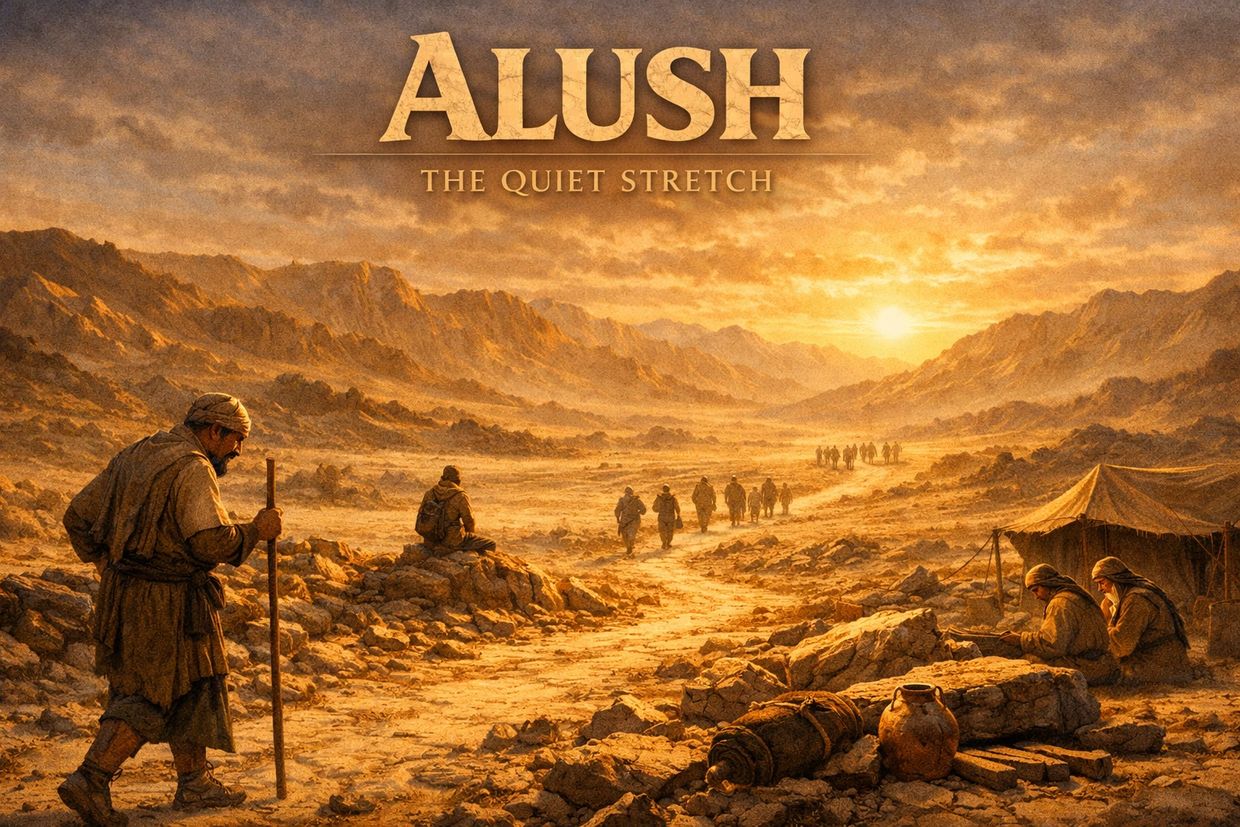
Sinai Series Part 10 | Alush: The Quite Stretch
“Faithfulness is not measured by emotion; it is measured by endurance.”
Scripture:
Numbers 33:13
13 They departed from Dophkah and camped at Alush.
Theme:
GOD strengthens endurance in the unnoticed places.
The Journey Between Miracles
Some moments in the Exodus story are dramatic, with seas parting, waters healed, and manna falling. But then there are places like Alush, where Scripture only gives us a name and a direction. There are just movement and walking. There is a space between one season and the next. Alush is where GOD is telling you to “Keep going, because I am strengthening you in the stretch.”
Alush in Historical and Cultural Context
Alush is mentioned only once in scripture. “They journeyed from Dophkah and camped at Alush.” (Numbers 33:13) That is all Scripture tells us. The journey from Dophkah to Alush was not easy because it was a long, tough stretch through harsh land. The name Alush might come from a word meaning “to knead,” “to press,” or “to squeeze.” This points to a place of pressure, stretching, endurance, and growth. Alush is where GOD presses His people, not to break them, but to make them stronger.
The Prophetic Meaning of Alush
Alush stands for the times when GOD stretches your endurance, strengthens your resolve, deepens your capacity, grows your faithfulness, and gets you ready for what’s next. Alush is not dramatic but is a time of growth. It is where GOD is building in you the strength you will need for the battles ahead.
The Journey Between Dophkah and Alush
Dophkah was a quiet place where GOD shaped His people on the inside. Alush is the stretch where that shaping turns into strength. In Dophkah, GOD forges your identity, while in Alush, GOD builds endurance. In Dophkah, GOD works quietly. In Alush, GOD works as you keep going. In Dophkah, GOD shapes the heart. In Alush, GOD strengthens your walk. Alush is where GOD says, “Let Me turn formation into endurance.”
The Silence of Scripture Is the Message
It is no accident that Scripture says nothing more about Alush. Alush stands for those times when nothing feels spiritual, important, dramatic, or new. Still, these seasons matter. Alush shows us that endurance is built in the quiet stretches no one notices.
The Stretch Between Provision and Pressure
Israel had just received manna, quail, Sabbath rest, and daily provision. But they had not yet faced Rephidim, the lack of water, Massah and Meribah, Amalek, battles, or changes in leadership. Alush is the space between provision and pressure. It is where GOD strengthens His people for what is coming. Alush is where GOD says, “I am preparing you for what you cannot yet see.”
The Wilderness of the Heart
Alush is also a spiritual experience because it is where GOD calls His people to keep walking when the journey feels long, to keep trusting when nothing exciting is happening. The LORD reminds His people to keep obeying when the path feels the same, to keep believing when emotions are quiet, and keep moving when the end is not in sight. Alush is where GOD teaches us that faithfulness is not measured by emotion, it is measured by endurance.
The Pressure That Produces Strength
If Alush means kneading or pressing, then the message becomes clear: Alush is like a kneading table. where The LORD presses out old habits, stretches new abilities, strengthens spiritual muscles, builds resilience, and gets the heart ready for challenges. Kneading is steady, repeated, and meant to change us. Alush is where the soul is kneaded.
Application: What Is Your Alush?
All of us should ask, "Where is GOD stretching me so He can make me stronger?" Your Alush might be a long wait, a time of steady obedience, a season of slow progress, a place where GOD seems quiet. For you it might be that moment when you just have to keep going. Alush is not a delay, but rather it is growth. It is where GOD is building the strength you will need for the next season.
Ministry Moment
You are invited to find your own Alush, that place where GOD is building your endurance. May the Lord give you strength in this stretch. May He build endurance, resilience, and resolve in you. May you walk with steady faith, and may your steps be strong for the journey ahead. Alush is where GOD gets His people ready for the battles and breakthroughs to come.
Conclusion
Alush is not dramatic, emotional, or loud. But it is essential because it is where GOD stretches, strengthens, steadies, prepares, and fortifies us. Alush is the quiet stretch where GOD builds endurance in you.
Shalom and Blessings in Yeshua's name.
Return to the Sinai Series Home
You can return to the Sinai Series Home Table of Contents by clicking the link below.
Come back anytime to continue exploring the Journey to Sinai, and how each of us will take that journey in our walk with the LORD.
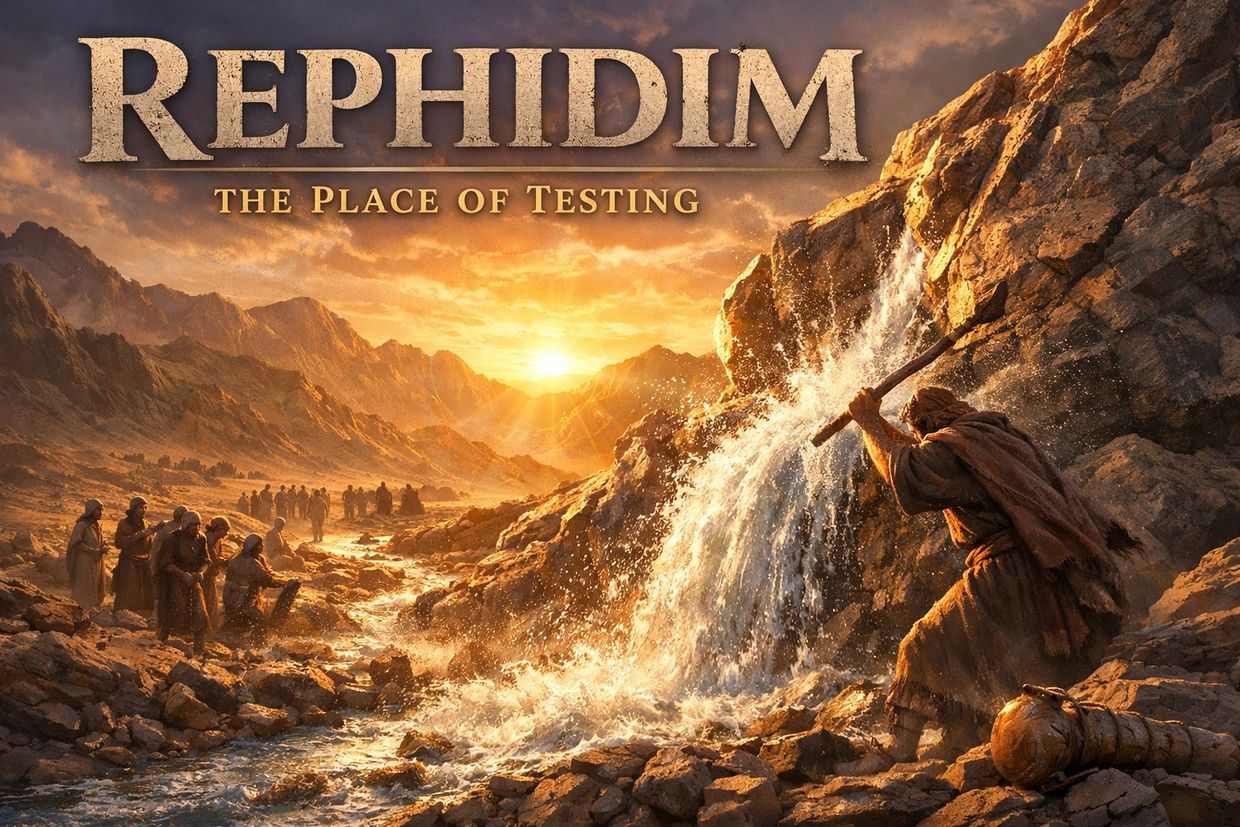
Sinai Series Part 11 | Rephidim: The Place of Testing
“Faithfulness is not measured by emotion; it is measured by endurance.”
Scripture:
Exodus 17:1-7
1 Then all the congregation of the children of Israel set out on their journey from the Wilderness of Sin, according to the commandment of the Lord, and camped in Rephidim; but there was no water for the people to drink. 2 Therefore the people contended with Moses, and said, “Give us water, that we may drink.” So Moses said to them, “Why do you contend with me? Why do you tempt the Lord?”
3 And the people thirsted there for water, and the people complained against Moses, and said, “Why is it you have brought us up out of Egypt, to kill us and our children and our livestock with thirst?” 4 So Moses cried out to the Lord, saying, “What shall I do with this people? They are almost ready to stone me!” 5 And the Lord said to Moses, “Go on before the people, and take with you some of the elders of Israel. Also take in your hand your rod with which you struck the river, and go. 6 Behold, I will stand before you there on the rock in Horeb; and you shall strike the rock, and water will come out of it, that the people may drink.” And Moses did so in the sight of the elders of Israel. 7 So he called the name of the place Massah and Meribah, because of the contention of the children of Israel, and because they tempted the Lord, saying, “Is the Lord among us or not?”
Theme:
GOD confronts unbelief to prepare us for authority.
The Pressure Before the Breakthrough
Rephidim is a key stop in the Exodus story. It's here where everything hidden in Israel’s heart comes out. There is no water, there's no shade, no relief, and no strength left. Under this pressure, Israel faces two challenges. First, Massah, where they test GOD, and second Meribah, where they accuse Him. At Rephidim, GOD must confront what is still shaping your heart.
Rephidim in Historical and Cultural Context
Rephidim means “place of rest,” but it turns out to be a place of conflict, tension, accusation, testing, and spiritual exposure. It was a dry, rocky area with no natural water. In ancient times, a lack of water could be deadly. Israel arrived tired after a long journey from Alush. Their bodies were weak, their animals were thirsty, their children were crying, and their spirits were fragile. Rephidim was the perfect place for hidden struggles to come out.
The Prophetic Meaning of Rephidim
Rephidim stands for the times when GOD lets pressure reveal unbelief, fear, entitlement, distrust, old wounds, and hidden lies. Rephidim is not about punishment, but about revelation. It is where GOD does not expose you to shame you but will exposing you to heal you.”
The People Quarrel With Moses
Scripture says, “The people quarreled with Moses…” (Exodus 17:2). This was more than just complaining. The Hebrew word riv means to argue, bring a case, accuse, or challenge authority. Israel was not just thirsty, they were angry. They were not asking but were demanding. They were not seeking but accusing. Rephidim shows the real problem, and it was that Israel did not yet trust GOD’s heart.
Massah: Testing GOD
The people ask, “Is the LORD among us or not?” (Exodus 17:7). This question is at the heart of Massah, which is about testing GOD’s presence. Massah is when fear suggests, “Maybe GOD won’t help.” “Maybe GOD doesn’t care.” “Maybe GOD brought me here to leave me.” Massah is a test of trust.
Meribah: Accusing GOD
The people take it further by then saying, “Why did you bring us up out of Egypt to kill us…?” (Exodus 17:3). This is the heart of Meribah, where they accuse GOD’s motives. Meribah is when hurt hearts say, “GOD is against me.” “GOD is punishing me.” “GOD is not good.” “GOD is not trustworthy.” Meribah tests GOD’s character.
Moses Cries Out, and GOD Responds With Grace
Moses turns to GOD and says, “What shall I do with this people? They are almost ready to stone me.” (Exodus 17:4). This is the lowest point in Moses’ leadership so far. But GOD does not respond with anger, rebuke, or punishment. Instead, He gives Moses instructions. GOD tells him, “Take your staff… and strike the rock.” (Exodus 17:5–6). This is powerful. The staff that once struck the Nile in judgment now strikes the rock in mercy. The rock stands for Yeshua. It is HIS provision, His grace, GOD’s presence, and the source of life. When the water comes from the rock, it is enough for everyone. Rephidim shows us that GOD provides even when our hearts are not perfect.
The Rock and the Cross
Paul writes, “The rock was Christ.” (1 Corinthians 10:4). This means Christ was struck so we could have life. He is the source of living water and our provision in the wilderness. Yeshua is the answer to Massah and Meribah. Rephidim is a picture of the cross where grace flows where there was once accusation.
Rephidim and the Wilderness of the Heart
Rephidim also represents a spiritual experience. It is where GOD faces our fears of being abandoned, lacking what we need, being disappointed, feeling unseen, or feeling unprotected. Rephidim is where GOD wants to heal the places where you doubt His goodness.
Application: What Is Your Rephidim?
We should all ask, "Where is GOD allowing pressure to reveal unbelief so He can heal it?" Your Rephidim might be a time of emotional exhaustion, a moment when GOD feels far away, a situation where help seems slow, a place where fear grows, a time when trust is hard, or a season when GOD challenges your inner thoughts. Rephidim is not the end, but the start of healing. It is where GOD wants to show you His goodness in your weakness.”
Ministry Moment
You are invited to find your own Rephidim, the place where pressure has brought out fear or unbelief. May the Lord show Himself as the Rock who provides. May living water reach every dry place. May Massah turn into trust, and Meribah into worship. May the Lord heal every place where His goodness has been doubted. Rephidim is where GOD heals the heart through His supernatural provision.
Conclusion
Rephidim is not a failure, a setback, or a moment of shame. It is where GOD faces unbelief, shows His goodness, gives water from the rock, heals wounded hearts, and gets His people ready for authority. Rephidim is where GOD says, “I am with you, even when you struggle to believe it.”
Shalom and Blessings in Yeshua's name.
Return to the Sinai Series Home
You can return to the Sinai Series Home Table of Contents by clicking the link below.
Come back anytime to continue exploring the Journey to Sinai, and how each of us will take that journey in our walk with the LORD.
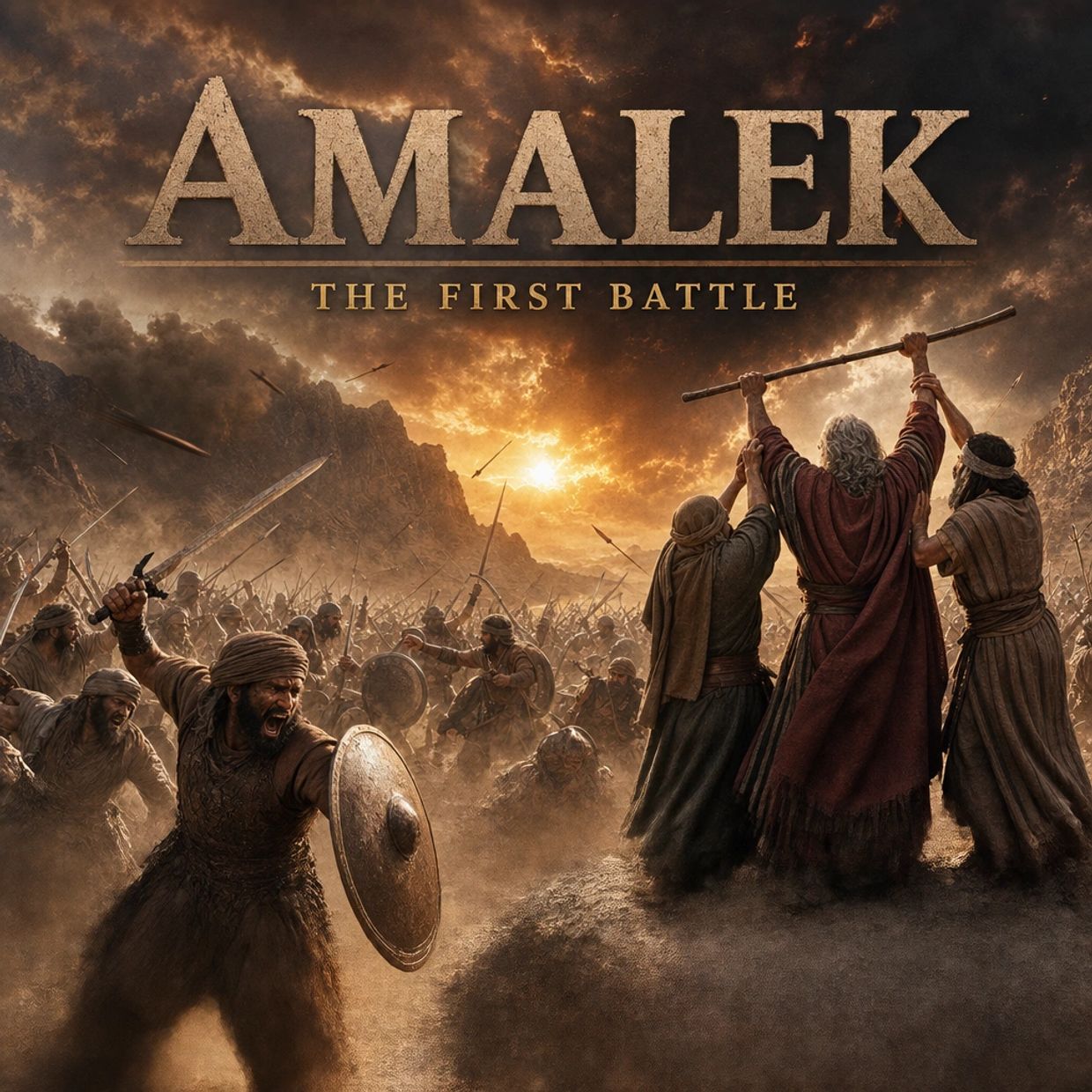
Sinai Series Part 12 | Amalek: The First battle
"The Enemy Always Attacks After Breakthrough"
Scripture:
Exodus 17:8-16
8 Now Amalek came and fought with Israel in Rephidim. 9 And Moses said to Joshua, “Choose us some men and go out, fight with Amalek. Tomorrow I will stand on the top of the hill with the rod of God in my hand.” 10 So Joshua did as Moses said to him, and fought with Amalek. And Moses, Aaron, and Hur went up to the top of the hill. 11 And so it was, when Moses held up his hand, that Israel prevailed; and when he let down his hand, Amalek prevailed. 12 But Moses’ hands became heavy; so they took a stone and put it under him, and he sat on it. And Aaron and Hur supported his hands, one on one side, and the other on the other side; and his hands were steady until the going down of the sun. 13 So Joshua defeated Amalek and his people with the edge of the sword.
14 Then the Lord said to Moses, “Write this for a memorial in the book and recount it in the hearing of Joshua, that I will utterly blot out the remembrance of Amalek from under heaven.” 15 And Moses built an altar and called its name, The-Lord-Is-My-Banner; 16 for he said, “Because the Lord has sworn: the Lord will have war with Amalek from generation to generation.”
Theme:
After deliverance comes warfare, but GOD teaches us how to fight.
Introduction: The Enemy Always Attacks After Breakthrough
Israel had passed through the Red Sea and stepped into a new life of freedom. They had tasted GOD’s provision in the wilderness and learned to depend on Him for daily bread. They had been healed at Marah, refreshed at Elim, and tested at Rephidim. Everything up to this point has been about formation, identity, and trust. But now, for the first time, they faced an enemy. This time it wasn't Pharaoh, it wasn't Egypt and wasn't even their past chasing them down. This time they faced a new enemy. This enemy was a wilderness enemy, a spiritual enemy. They were Amalek.
Amalek strikes Israel at the worst possible moment, the moment when they were tired, thirsty, unprepared, and vulnerable. This was not random. This encounter that Israel had with Israel reveals a spiritual pattern. Amalek is the enemy that attacks after breakthrough, that waits for weariness, that comes from behind and strikes without warning. It is at this moment that GOD begins to teach His people how to fight.
Amalek in Historical and Cultural Context
Amalek was a nomadic tribe descended from Esau, known for hostility, opportunism, and cruelty. They were not honorable warriors. Amalek specialized in ambush, preying on the weak and attacking from behind. Deuteronomy later reveals that they targeted the stragglers, those who were tired, weary, and could not keep up. They struck without any fear of GOD. Because of this, Amalek becomes more than a historical tribe. They become a symbol of spiritual opposition, generational hostility, the flesh resisting the Spirit, and demonic pressure against GOD’s covenant people. It is no accident that Amalek is the first enemy Israel faces as a free nation. Their appearance marks the beginning of Israel’s training in warfare.
The Prophetic Meaning of Amalek
Amalek represents the battles that rise up after deliverance, a healing, a breakthrough, a progress, and after we begin walking in obedience. This is the enemy that whispers, “You may have left Egypt, but you will not reach Sinai.” Amalek tries to stop your journey, stop your momentum, break your faith, exhaust your strength, and intimidate your heart. This enemy always aims at your identity before he targets your destiny. Amalek shows up when you are moving forward, not when you are standing still. It is the resistance that tries to keep you from the mountain where GOD intends to meet you.
The Battle Begins - and Moses Responds
Scripture says that Amalek came and fought with Israel at Rephidim. Israel had never fought a battle in their lives. They had no military training, no strategy, and no real weapons beyond what they carried out of Egypt. Yet Moses responds with surprising clarity and authority. He tells Joshua to choose men and go out to fight. This is the first time Israel is commanded to engage in battle. At the Red Sea, The LORD fought for them. Now, HE will fight through them. This moment marks the shift from deliverance to warfare. It is a transition from being rescued to being trained.
Moses on the Hill - Joshua in the Valley
Moses tells Joshua that he will stand on the hill with the staff of GOD in his hand. This creates a powerful prophetic picture. Joshua is in the valley, representing action, obedience, and earthly engagement. Moses is on the hill, representing intercession, authority, and heavenly alignment. Aaron and Hur stand beside Moses, supporting him when his strength begins to fail. This is the first time Scripture reveals the structure of spiritual warfare. In warfare there are those who fight, those who pray, those who support, those who stand, and those who hold up weary arms. Victory is never the work of one person. It is the fruit of unity.
The Staff of GOD - The Banner of Victory
As long as Moses holds up the staff, Israel prevails. Strength rises, momentum builds, and the tide of battle turns in their favor. But when Moses lowers his hands, Amalek gains ground. This shows us a spiritual reality. The staff represents GOD’s authority, presence, leadership, covenant, and power. Moses’ raised hands represent intercession, surrender, dependence, alignment, and spiritual covering. The battle is not won by swords or skill. It is won by intercession that keeps heaven and earth connected.
Aaron and Hur - The Ministry of Support
Eventually Moses’ hands grow heavy. This detail matters. Even the strongest leaders grow weary. Even the most anointed intercessors need support. Even the most faithful servants cannot stand alone forever. Aaron and Hur step in, placing a stone under Moses so he can sit, and holding up his hands so the battle can continue. This becomes the first biblical picture of team ministry, shared burden, intercessory partnership, and unity in warfare. The victory over Amalek required Moses’ authority, Joshua’s obedience, Aaron’s support, and Hur’s strength. No one wins alone.
Joshua Defeats Amalek
Scripture says that Joshua overwhelmed Amalek with the sword. This is Joshua’s first appearance as a warrior, and this battle becomes the training ground for everything that will come later.; Jericho, Canaan, leadership, and inheritance. Before Joshua leads Israel into the Promised Land, he must first learn how to fight in the wilderness. Amalek becomes the classroom where Joshua’s destiny begins to unfold. The LORD will use Amalek in your life to teach you how to depend on HIM, how to pray effectively, and how to fight in the spiritual realm so later when the battles get bigger, you will not hesitate to enter into the fight, knowing the LORD is with you, guiding you, and protecting you.
God Makes a Declaration
After the battle, GOD tells Moses to write the event as a memorial and declares that He will blot out the memory of Amalek. This is the first time The LORD commands Moses to write something down. The battle with Amalek is not just historical, it is prophetic. Amalek represents the flesh, the enemy, spiritual resistance, and generational hostility. GOD declares that this enemy will not survive. The battle may be long, but the outcome is already determined.
Moses Builds an Altar
Moses builds an altar and names it Yahweh Nissi, “The Lord is my Banner.” This is the first time GOD is revealed under this name. HE is the GOD who covers, leads, and fights for His people. In ancient warfare, a banner was a rallying point, a symbol of victory, a declaration of identity, and a sign of divine presence. By naming the altar this way, Moses is saying, “GOD is the One who gives victory. GOD is the One who leads us. GOD is the One who fights for us.”
Amalek and the Wilderness of the Heart
Amalek is not just a tribe but also represents a spiritual pattern. It represents the enemy that attacks when you are weary, the enemy that targets your weakness, tries to stop your journey, and hates your destiny. Amalek rises up right before breakthrough. It is the voice that says, “You will not reach Sinai.” But GOD answers, “I will fight for you, and I will fight through you.” Amalek becomes the place where The LORD strengthens the heart of His people.
Application - What Is Your Amalek?
Every believer must eventually ask, “What is the enemy that rises to stop me right before breakthrough?” Amalek may show up as spiritual attack, discouragement, temptation, fear, exhaustion, old patterns resurfacing, relational conflict, or emotional warfare. Amalek is not a sign that you are failing. It is a sign that you are advancing. It is the place where The LORD says, “Fight, but do not fight alone.” Amalek reveals both your weakness and GOD’s strength.
Ministry Moment
We invite you to identify your Amalek, that enemy that rises to oppose you in seasons of transition. Then speak blessing over you and that area: “May the Lord be your Banner. May He fight for you and through you. May your arms be strengthened, your intercession sustained, and your victory secured. May every Amalek that rises against you fall.” Amalek becomes the place where The LORD trains His people for spiritual authority.
Conclusion
Amalek is not the end of the journey. It is the initiation into warfare. It is the place where The LORD trains, strengthens, unites, equips, reveals, and empowers His people. Amalek is where GOD says, “You are not just delivered. You are a warrior.”
Return to the Sinai Series Home
You can return to the Sinai Series Home Table of Contents by clicking the link below.
Come back anytime to continue exploring the Journey to Sinai, and how each of us will take that journey in our walk with the LORD.
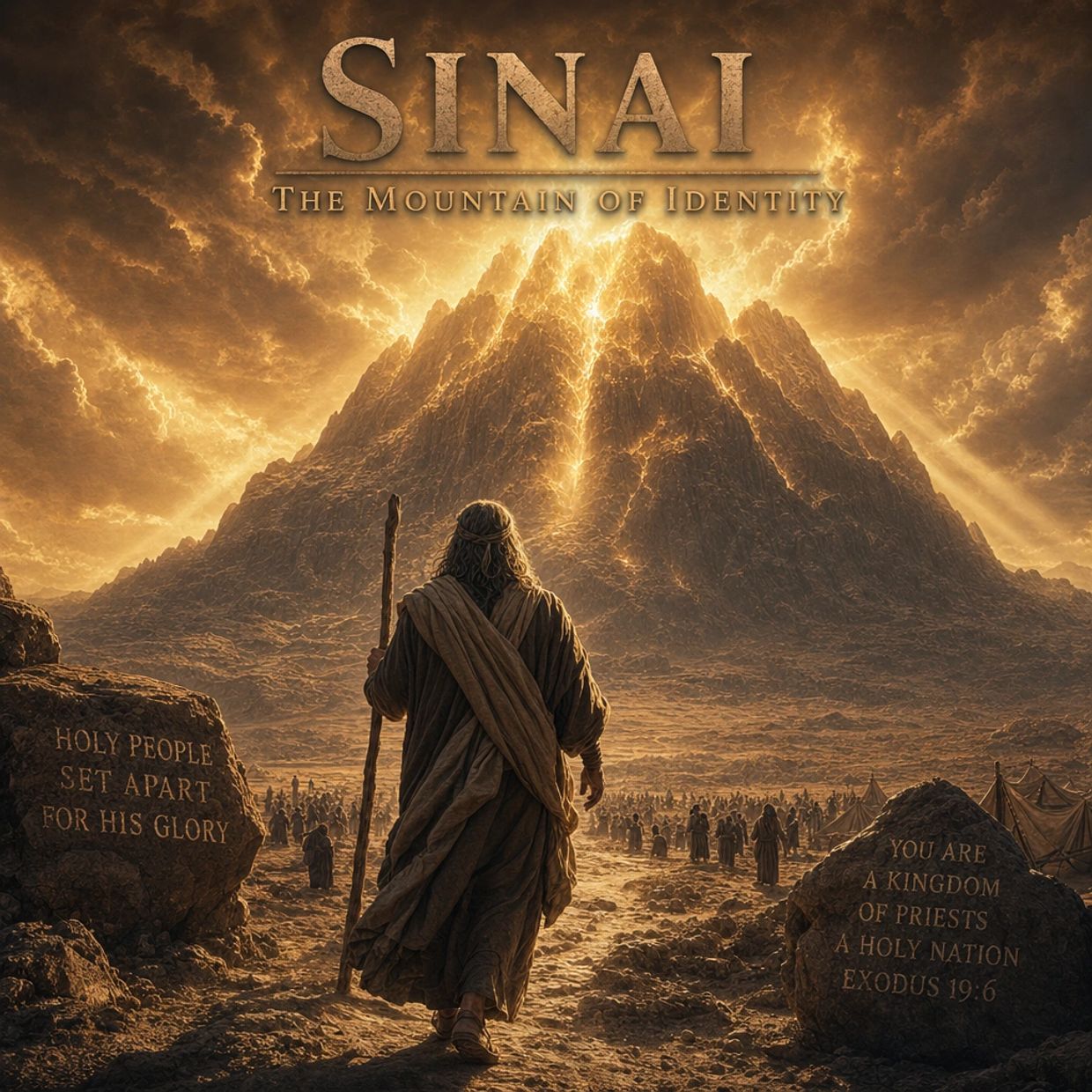
Sinai Series Part 13 | SINAI: The Mountain of Identity
“GOD brings His people to the mountain not to give rules, but to give identity. ”
Scripture:
Exodus 19:1-16
1 In the third month after the children of Israel had gone out of the land of Egypt, on the same day, they came to the Wilderness of Sinai. 2 For they had departed from Rephidim, had come to the Wilderness of Sinai, and camped in the wilderness. So Israel camped there before the mountain.
3 And Moses went up to God, and the Lord called to him from the mountain, saying, “Thus you shall say to the house of Jacob, and tell the children of Israel: 4 You have seen what I did to the Egyptians, and how I bore you on eagles’ wings and brought you to Myself. 5 Now therefore, if you will indeed obey My voice and keep My covenant, then you shall be a special treasure to Me above all people; for all the earth is Mine. 6 And you shall be to Me a kingdom of priests and a holy nation.’ These are the words which you shall speak to the children of Israel.”
7 So Moses came and called for the elders of the people, and laid before them all these words which the Lord commanded him. 8 Then all the people answered together and said, “All that the Lord has spoken we will do.” So Moses brought back the words of the people to the Lord. 9 And the Lord said to Moses, “Behold, I come to you in the thick cloud, that the people may hear when I speak with you, and believe you forever.”
So Moses told the words of the people to the Lord.
10 Then the Lord said to Moses, “Go to the people and consecrate them today and tomorrow, and let them wash their clothes. 11 And let them be ready for the third day. For on the third day the Lord will come down upon Mount Sinai in the sight of all the people. 12 You shall set bounds for the people all around, saying, ‘Take heed to yourselves that you do not go up to the mountain or touch its base. Whoever touches the mountain shall surely be put to death. 13 Not a hand shall touch him, but he shall surely be stoned or shot with an arrow; whether man or beast, he shall not live.’ When the trumpet sounds long, they shall come near the mountain.”
14 So Moses went down from the mountain to the people and sanctified the people, and they washed their clothes. 15 And he said to the people, “Be ready for the third day; do not come near your wives.”
16 Then it came to pass on the third day, in the morning, that there were thunderings and lightnings, and a thick cloud on the mountain; and the sound of the trumpet was very loud, so that all the people who were in the camp trembled.
Theme:
GOD brings His people to the mountain not to give rules, but to give identity.
The Journey Has a Destination
Every step from Rameses to Sinai has been intentional. The process started at Rameses where the LORD broke the old identity. Succoth provided shelter for the fragile heart. Etham taught trust. Pi Hahiroth exposed fear. The Red Sea buried the past and all that pursued the people. Marah was the place for healing wounds. Elim then restored the soul. The Wilderness of Sin taught dependence. Dophkah formed character. Alush is where endurance was formed. Rephidim confronted unbelief. Amalek was used to train the people for warfare.
Now, finally, Israel arrives at Sinai. But Sinai is not the end of the journey, it’s the beginning of purpose. It’s the place where GOD says, “Now that you are free, let Me show you who you truly are.”
Sinai in Historical and Cultural Context
Sinai rises from the wilderness like a monument of mystery. It was barren, rugged, and awe‑inspiring. It was a place of isolation and silence, where the air itself feels sacred. In the ancient world, mountains were seen as dwelling places of gods, meeting points between heaven and earth, places of covenant and revelation.
Sinai is where heaven touches earth. It’s where GOD descends in fire and smoke, thunder and cloud, glory and power. It’s the most dramatic revelation of GOD in the Old Testament, where a mountain trembled under the weight of divine presence.
The Prophetic Meaning of Sinai
Sinai represents identity, covenant, calling, destiny, and holiness. It’s the mountain of relationship, not restriction. GOD didn’t bring His people out of Egypt just to free them, He brought them out to form them. Sinai isn’t about rules, it’s about relationship. It isn’t about law but about identity. It isn’t about limitations, but revelation.
At Sinai, GOD begins to define who His people truly are.
GOD’s First Words at Sinai
Before GOD gives a single command, He gives an identity. He says, “You have seen what I did to the Egyptians, how I carried you on eagles’ wings and brought you to Myself.” That’s the heart of Sinai: “I brought you to Myself.”
Not to a religion. Not to a system. Not to a set of rules. The LORD brought HIS people to Himself. Sinai is the place where GOD reveals His heart and invites His people into intimacy without obligation.
The Covenant Identity
Then GOD speaks words that define His people forever: “You shall be My treasured possession, a kingdom of priests, and a holy nation.”
He calls them His treasured possession, chosen, valued, loved, set apart. He calls them a kingdom of priests, worshipers, intercessors, carriers of His presence. And He calls them a holy nation, distinct, consecrated, set apart for purpose.
Sinai is the place where GOD looks at His people and says, “This is who you are.”
The People Prepare for Encounter
GOD tells Moses to consecrate the people, wash their garments, set boundaries, and prepare for the third day. This isn’t about ritual; this is The LORD preparing HIS people for an encounter with HIM. Sinai teaches that encounter requires preparation. The LORD is not looking for perfection, just a heart that has been prepared and willing. GOD does not ask for a performance because HE is asking for posture. He wants hearts that are ready to meet Him.
GOD Descends on the Mountain
On the third day, the mountain shakes. Thunder rolls, lightning flashes, a thick cloud gathers, and the sound of a trumpet pierces the air. Fire and smoke rise as the earth trembles beneath the weight of glory.
This isn’t a spectacle because it is a revelation. GOD is revealing His holiness, His power, His majesty, and His presence. Sinai is the place where GOD declares, “I am not like the GODs of Egypt. I am the living GOD.”
The Trumpet of GOD
Scripture says, “The sound of the trumpet grew louder and louder.” This isn’t a human shofar, it’s the shofar of heaven. It announces GOD’s arrival, His authority, His covenant, and His kingship. Sinai becomes the birthplace of the heavenly trumpet, the sound that calls creation to attention when GOD speaks.
Moses Ascends the Mountain
Moses climbs into the cloud, into the fire, into the presence. His ascent is a picture of intimacy and calling. He steps into the unknown to meet with GOD face‑to‑face. In that moment, Moses becomes the mediator between heaven and earth, between GOD and His people. Sinai is the place where GOD forms leaders, those willing to climb higher when others stay at the base.
The Ten Commandments
Before these words become laws, they are identity statements. They reveal GOD’s nature, His values, His holiness, His priorities, and His heart. The Ten Commandments aren’t restrictions. That's because they are relational boundaries. They teach Israel how to love GOD, love people, live as a holy nation, and reflect His character. Sinai is where GOD shapes the culture of His people.
The Fear of the People
When the people see the fire and hear the trumpet, they tremble. They cry out, “Do not let GOD speak to us, or we will die.” Their fear wasn't rebellion, but holy reverence and awe. So, Moses answers the people, “Do not be afraid. GOD has come to test you, so that the fear of Him will keep you from sinning.”
Sinai teaches that the fear of the LORD isn’t terror. The fear of the LORD is alignment with HIM and HIS ways. It is the reverence for GOD that keeps the heart steady and the soul pure.
Sinai and the Wilderness of the Heart
Sinai is also more than a mountain. It becomes a profound spiritual experience. It’s where GOD reveals Himself to HIS people, HE defines their identity and establishes HIS covenant. The LORD also gives purpose, forms culture, and calls His people higher. Sinai is the place where GOD says, “You are Mine, now walk in who you are.”
Application: What Is Your Sinai?
Every one of us must ask, “Where is GOD calling me into deeper identity, covenant, and purpose?” Your Sinai may look like a moment of revelation, a season of consecration, a call to holiness, a deeper assignment, or a fresh commissioning. It’s the place where GOD speaks identity over your life. Sinai marks the beginning of destiny. It is the place where GOD says, “Now that you are free, let Me show you who you are.”
Ministry Moment
We invite you to identify your Sinai. What is that place where GOD is calling you into deeper identity and purpose. Then declare: “May the Lord reveal Himself to me at your Sinai. May He speak identity, destiny, and calling over my life. May His presence mark me, His covenant anchor me, and His voice lead me into purpose.”
Sinai is the place where GOD forms a people for Himself.
Conclusion
Sinai is the culmination of the journey, but it’s also the beginning of destiny. It’s where GOD reveals His heart, defines identity, establishes covenant, calls His people higher, forms a holy nation, and commissions a kingdom of priests.
Sinai is the mountain of identity, the place where GOD says, “You are My treasured possession. You are My holy nation. You are My kingdom of priests. Walk in who you are.”
Return to the Sinai Series Home
You can return to the Sinai Series Home Table of Contents by clicking the link below.
Come back anytime to continue exploring the Journey to Sinai, and how each of us will take that journey in our walk with the LORD.