The Elisha Series

The Elisha Series invites you into the unfolding story of a prophet shaped by the presence, power, and compassion of the living GOD. From the quiet beginnings of his calling to the breathtaking miracles that marked his ministry, Elisha’s life reveals a GOD who draws near to save His people, help His people, heal their brokenness, and empower them to walk in their divine purpose.
Across these teachings, you’ll follow Elisha from the moment the mantle first touches his shoulders, through the seasons of preparation, obedience, and surrender that formed him into a vessel of GOD’s supernatural work. You’ll encounter the GOD who provides in famine, the GOD who restores what was lost, the GOD who heals what is broken, and the GOD who pours out a double‑portion anointing on those who pursue Him with unwavering devotion.
From the first calling to the final miracle that occurred even after his death, Elisha’s story testifies that GOD is faithful, GOD is present, and GOD is still moving with power in the lives of those who say yes to His call. This series is an invitation to step deeper into that same journey — to discover the GOD who helps, the GOD who heals, and the GOD who equips His people to live a life marked by purpose, obedience, and supernatural overflow.
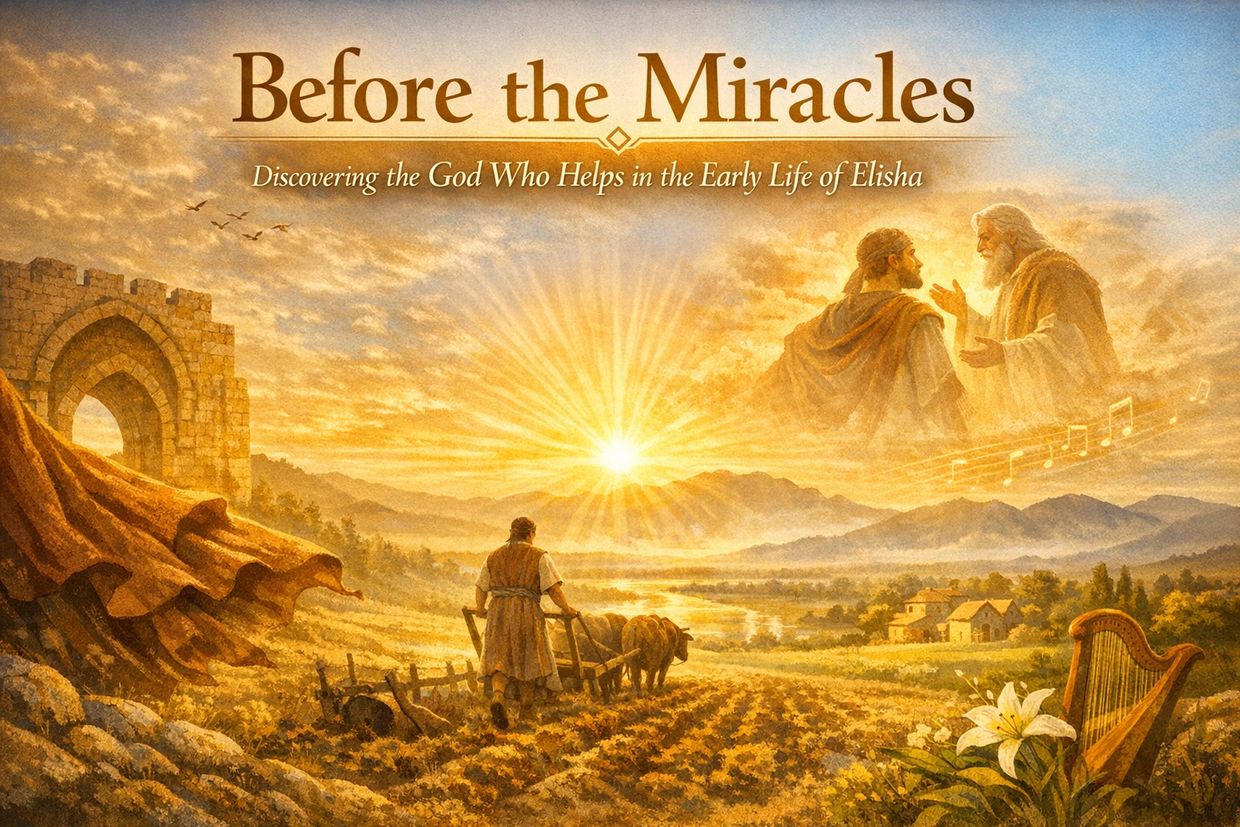
Elisha: Revealing the GOD who Helps
Elisha’s name declares it: God helps, God saves, and He still does.
1 Kings 19:15-16 15 Then the LORD said to him: “Go, return on your way to the Wilderness of Damascus; and when you arrive, anoint Hazael as king over Syria. 16 Also you shall anoint Jehu the son of Nimshi as king over Israel. And Elisha the son of Shaphat of Abel Meholah you shall anoint as prophet in your place.
Before the Miracles:
Discovering the GOD Who Helps in the early life of Elisha in a season marked by widespread challenges and uncertainty, can help many believers who are searching for renewed encouragement, hope, and joy. The biblical account of Elisha offers a timely reminder that GOD not only reveals Himself but also draws near to help His people in their moments of need. While Elisha is best known for the miracles that marked his ministry, the earliest references to his life reveal profound truths about the character of GOD long before the first miracle ever takes place.
When we stop and look at the meaning of Elisha’s name, it reveals that “GOD saves: and "GOD helps.” This meaning becomes a lens through which his entire ministry can be understood. Yet even before Elisha steps into his prophetic calling, Scripture provides a rich foundation that highlights how GOD prepares, shapes, and positions His servants, including you.
The First Mention of Elisha:
Elisha first appears in 1 Kings 19:15–16, not in person, but in the words GOD speaks to Elijah. The prophet is instructed to anoint Elisha as his successor, even though Elisha is still far away, unseen and unknown to the narrative at that moment. This early introduction reveals that GOD was already at work in Elisha’s life long before Elijah arrived. His calling was spoken in heaven before it was visible on earth.
Elijah’s own name means “My GOD is Yahweh,” reflecting a ministry centered on revealing the identity of the true and living GOD. Elijah’s confrontation with the prophets of Baal on Mount Carmel demonstrated this powerfully when the false GODs were exposed, and the GOD of Israel revealed Himself unmistakably.
In the same way, many believers today are witnessing GOD expose false sources of trust and reveal Himself as the only true foundation. Once GOD reveals Himself, He does not leave His people to navigate life alone. He comes with mercy, compassion, and help, and this transition is embodied in the shift from Elijah to Elisha.
The Meaning in Elisha’s Background:
Scripture notes that Elisha was the son of Shaphat, a name meaning “judged” or “he has judged.” He lived in Abel Meholah, meaning “meadow of dancing.” Together, these details form a prophetic picture: "After judgment, GOD comes to save and help, leading His people into rejoicing." This theme echoes throughout Scripture. After seasons of hardship, correction, or difficulty, GOD stands ready to restore, renew, and bring His people into joy. He turns mourning into dancing, heaviness into gladness, and despair into praise. Elisha was conceived by Shaphat and his wife, Elisha's natural parents. May times our JOY and DNACING are conceived when we come through or are "birthed" out of difficult times.
The Plow, the Mantle, and the Prepared Heart
When Elijah finally encounters Elisha in 1 Kings 19:19, Elisha is plowing with twelve yoke of oxen. While the twelve yoke carry symbolic significance, the image of the plow itself offers a powerful spiritual parallel. A plow breaks up hard, dry ground. A plow prepares the soil for seed and water. A plow makes room for new life to grow and bear fruit. This imagery reflects the work GOD often does in the hearts of His people. Seasons of dryness or difficulty can become moments of preparation, where GOD softens the ground of the heart to receive fresh seed and living water. When Elijah casts his mantle over Elisha, it symbolizes not only calling but also GOD’s readiness to help a prepared heart step into its purpose.
A GOD Who Helps in Times of Need
The New Testament echoes this theme in Hebrews 4:16, which invites believers to come boldly to the throne of grace to receive mercy and find help in times of need. This verse aligns perfectly with the meaning of Elisha’s name. GOD is not distant or indifferent; He is a GOD who helps. Every believer will face moments of need, but Scripture assures that help is always available to those who seek Him.
From Mourning to Dancing: The Promise of Restoration The message of Elisha’s early life culminates beautifully in Psalm 30:10–12, where the psalmist declares:
“LORD, be my helper… You have turned my mourning into dancing… O LORD my GOD, I will give thanks to You forever.”
This passage captures the essence of Elisha’s calling and the heart of GOD toward His people. Before the miracles, before the mantle, before the public ministry, the story of Elisha reveals a GOD who helps, restores, and brings His people into joy.
Jump to the top of the page
Click the link below to return to the Elisha Series home
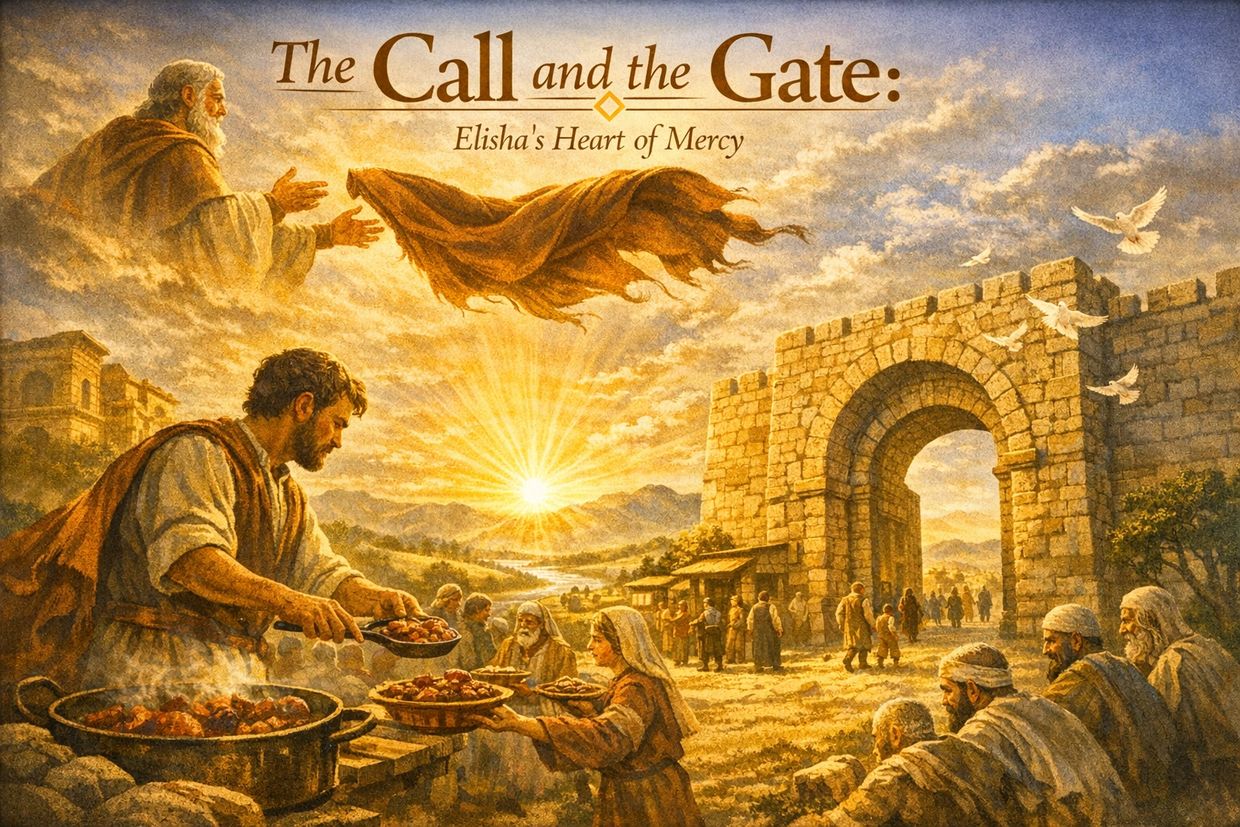
The Call and the Gate: Elisha’s Heart of Mercy
Mentorship shapes the heart for the mantle.
In the previous teaching, you were introduced to Elisha’s background, the son of Shaphat from Abel Meholah, whose name and birthplace together reveal a prophetic message: after judgment comes salvation and help, so that rejoicing may follow. Through that foundation, the LORD reminded His people that He offers fresh beginnings and prepares hearts like soil ready for seed, watering them with His Word and the breath of His Spirit. It was a message of hope and renewal for a weary generation.
1 Kings 19:19-21
19 So he departed from there, and found Elisha the son of Shaphat, who was plowing with twelve yoke of oxen before him, and he was with the twelfth. Then Elijah passed by him and threw his mantle on him. 20And he left the oxen and ran after Elijah, and said, “Please let me kiss my father and my mother, and then I will follow you.”
And he said to him, “Go back again, for what have I done to you?”
21 So Elisha turned back from him, and took a yoke of oxen and slaughtered them and boiled their flesh, using the oxen’s equipment, and gave it to the people, and they ate. Then he arose and followed Elijah, and became his servant.
Now, the story continues as Elisha steps into view for the first time. In 1 Kings 19:19–21, Elijah finds him plowing with twelve yoke of oxen. When Elijah passes by and casts his mantle upon him, Elisha immediately responds, but not with haste or disregard. His first concern is for his parents, ensuring their peace before he departs. Then, in an act of generosity and compassion, he slaughters the oxen, cooks their meat, and feeds the people of his village. Only after serving others does he rise to follow Elijah.
This moment reveals the heart of Elisha before his ministry ever begins. He is thoughtful, merciful, and deeply aware of the needs of those around him. His actions mirror the nature of GOD Himself, a GOD full of compassion, desiring that none should perish but that all should find life and help in Him.
To understand the depth of this calling, imagine the cities of ancient times: small, walled communities surrounded by gates. Outside those walls lived the poor, the outcast, and the broken. The gates were the passageways through which people entered to find safety, provision, and hope. In the same way, the Church today can resemble a city with walls, protective, but sometimes closed. Yet every wall must have gates. Gates are the openings through which mercy flows and through which those seeking refuge can enter.
Elisha, even before being trained by Elijah, embodied this truth. He became a living gate, an earthen vessel through which GOD’s compassion and salvation could flow to others. His willingness to serve and bless his community reflected the heart of the LORD, who uses His people as conduits of grace.
The lesson is clear: believers are called to be gates, not walls. Protection has its place, but isolation does not. Every heart should remain open so that the mercy, compassion, and salvation of GOD can reach a world desperate for hope. Elisha’s example reminds the Church to open its gates wide, allowing the blessings of the LORD to pour out freely.
The Apostle Paul echoes this call in Romans 10:14–15, declaring, “How beautiful are the feet of those who preach the gospel of peace, who bring glad tidings of good things.” Just as Elisha served before he followed, believers today are sent to serve before they speak, to be gates through which the goodness of GOD enters the lives of others.
Before Elisha’s miracles ever begin, Scripture reveals a servant’s heart, one that opens the way for mercy to flow. His story invites every believer to do the same: to rise, to serve, and to become a gate through which the GOD who saves and helps can reach the world.
Jump to the top of the page
Click the link below to return to the Elisha Series home
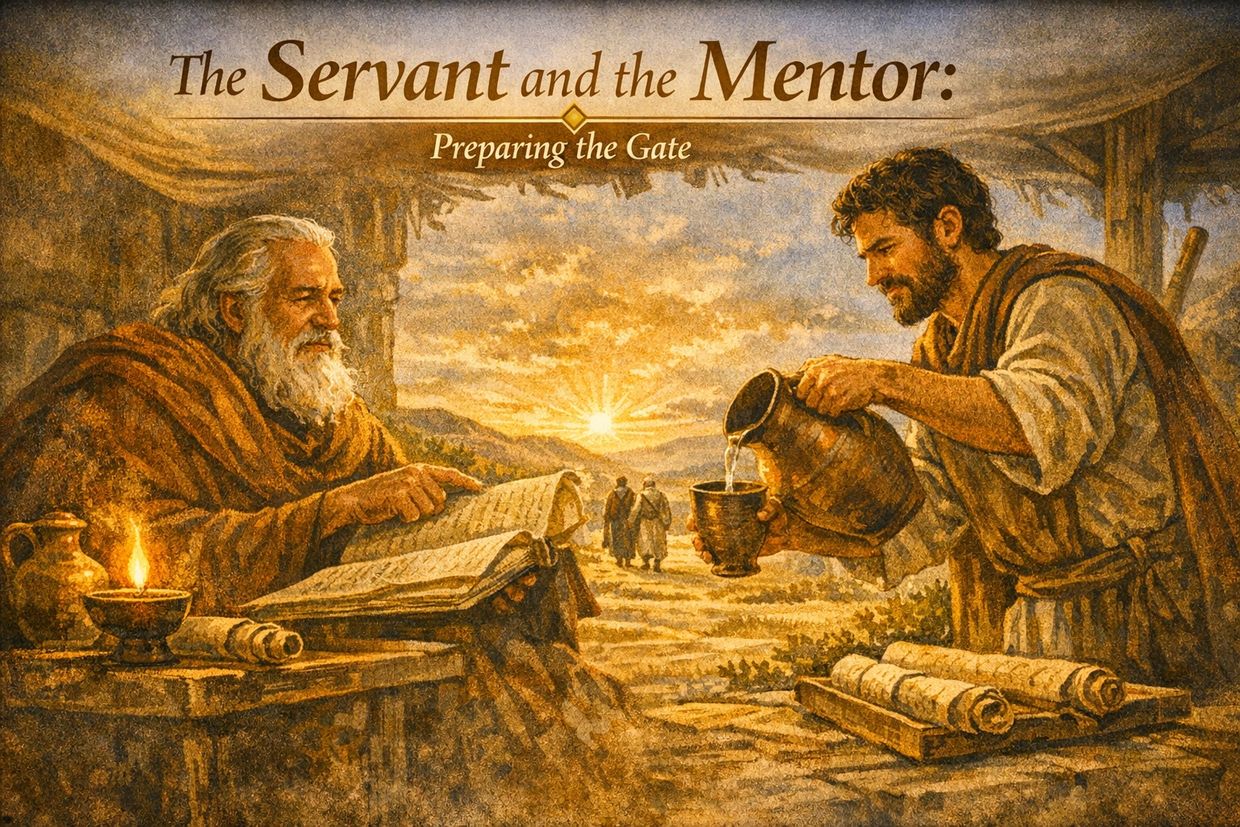
The Servant and the Mentor: Preparing the Gate
Mentorship shapes the heart for the mantle.
In the previous teaching, you saw Elisha’s heart revealed, a man of compassion who served his family and community before ever stepping into ministry. He was an open gate through which GOD’s mercy and hope flowed, showing that the LORD desires His people to be conduits of blessing rather than walls of isolation. That foundation now leads to the next stage of Elisha’s journey: the quiet years of preparation.
1 Kings 19:21
21 So Elisha turned back from him, and took a yoke of oxen and slaughtered them and boiled their flesh, using the oxen’s equipment, and gave it to the people, and they ate. Then he arose and followed Elijah, and became his servant.
1 Kings 19:21 records that Elisha “arose and followed Elijah, and became his servant.” This single word, servant, carries profound meaning. It marks the beginning of a season of hidden growth. From the moment Elisha left his plow, he entered a time of learning, watching, and serving under Elijah’s mentorship. Though Scripture does not record Elisha’s actions between 1 Kings 19 and 2 Kings 2, he was present all along, observing, assisting, and being shaped by the prophet whom GOD had placed over him.
Before Elisha could move in his calling, he had to be mentored. The LORD used Elijah to teach him the ways of the Spirit, to model obedience, and to prepare him for the mantle he would one day carry. The Bible does not specify how many years this season lasted, perhaps six to ten, and that omission is intentional. GOD does not set rigid timelines for growth. Each believer’s journey of preparation is unique, shaped by divine timing rather than human expectation.
Every gate must first be built before it can be opened. Likewise, every servant of GOD must be formed before being sent. Elisha’s example reminds believers that mentorship is essential. Just as Elisha had Elijah, every follower of Christ needs a spiritual mentor, someone who guides, corrects, and encourages. And in turn, every believer is called to mentor others, passing on what has been freely received.
This principle echoes throughout Scripture. The Apostle Paul had Timothy; Elijah had Elisha. Even Yeshua Himself mentored His disciples, teaching them by example and preparing them to carry His message after His ascension. In Matthew 10:6–8, Yeshua instructs His disciples to go, preach, heal, cleanse, and raise up, to be gates of mercy and compassion. He then concludes with, “Freely you have received, freely give.” Mentorship is woven into the command that those who have received truth and grace are called to give it away.
The same pattern appears again in 2 Timothy 2:1–2, where Paul writes, “The things you have heard from me… commit these to faithful men who will be able to teach others also.” This is the rhythm of the Kingdom. It is a rhythm of receiving, growing, and giving. Elisha’s years of service under Elijah were not wasted; they were the foundation upon which his ministry would stand.
Our lesson is clear: before believers can become gates of blessing, they must allow the LORD to build and strengthen them through mentorship. Growth takes time. Preparation requires patience. But when the season of learning is complete, the gate stands ready, strong, open, and able to release the mercy and compassion of GOD into a world that desperately needs Him.
Jump to the top of the page
Click the link below to return to the Elisha Series home
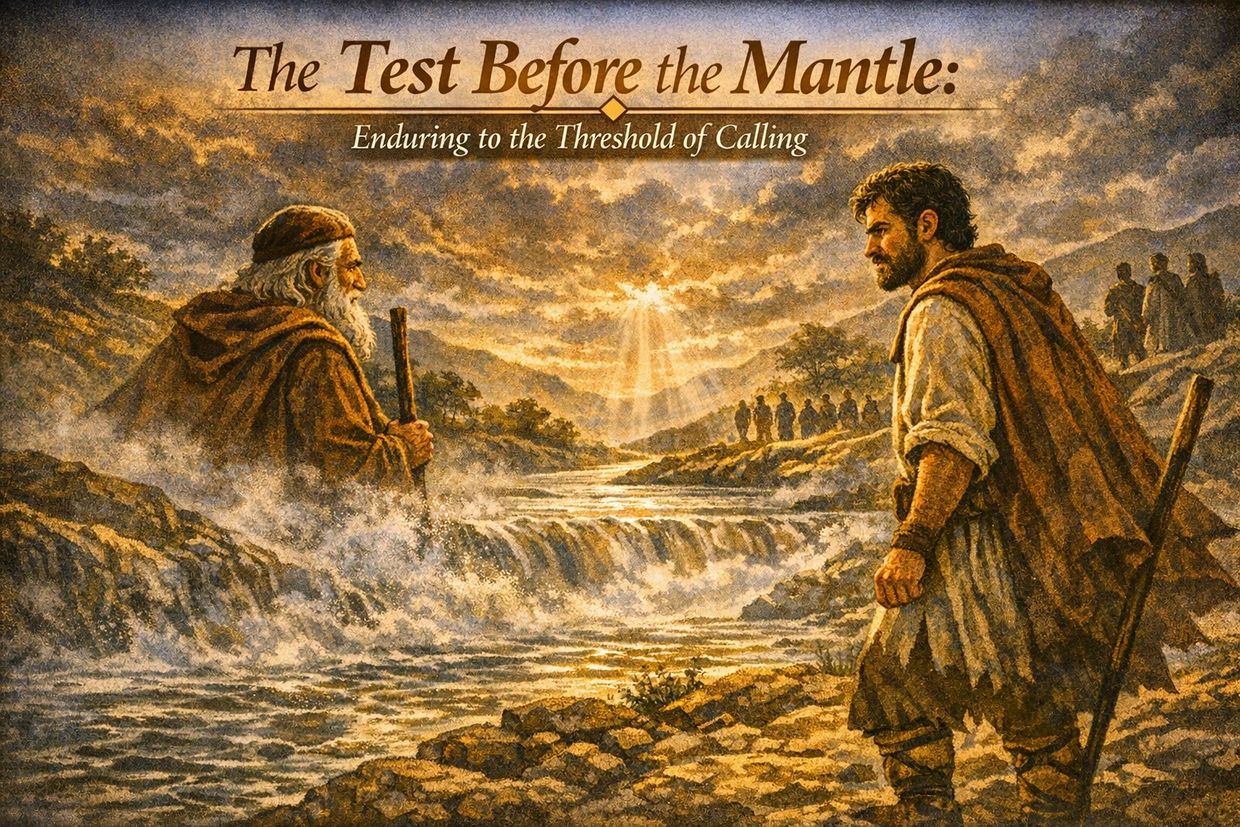
The Test Before the Mantle
“When pressure rises, purpose is often just ahead.”
The first three teachings in this series revealed how the LORD was laying a foundation in the life of Elisha, and in the lives of those following this journey. GOD has been preparing His people for purpose. HE has been shaping hearts and building spiritual gates through which His mercy and calling can flow. Now, as the story continues, Elisha stands at the end of his season of mentorship and at the threshold of stepping into the calling GOD placed upon him.
2 Kings 2:1-7
1And it came to pass, when the Lord was about to take up Elijah into heaven by a whirlwind, that Elijah went with Elisha from Gilgal. 2 Then Elijah said to Elisha, “Stay here, please, for the Lord has sent me on to Bethel.”
But Elisha said, “As the Lord lives, and as your soul lives, I will not leave you!” So they went down to Bethel.
3 Now the sons of the prophets who were at Bethel came out to Elisha, and said to him, “Do you know that the Lord will take away your master from over you today?”
And he said, “Yes, I know; keep silent!”
4 Then Elijah said to him, “Elisha, stay here, please, for the Lord has sent me on to Jericho.”
But he said, “As the Lord lives, and as your soul lives, I will not leave you!” So they came to Jericho.
5 Now the sons of the prophets who were at Jericho came to Elisha and said to him, “Do you know that the Lord will take away your master from over you today?”
So he answered, “Yes, I know; keep silent!”
6 Then Elijah said to him, “Stay here, please, for the Lord has sent me on to the Jordan.”
But he said, “As the Lord lives, and as your soul lives, I will not leave you!” So the two of them went on. 7 And fifty men of the sons of the prophets went and stood facing them at a distance, while the two of them stood by the Jordan.
When we pick up with Elisha's journey in 2 Kings 2:1–7, Elijah is nearing the moment when the LORD will take him up into heaven. Elisha, who left everything to serve and be mentored by him, now faces a day filled with pressure, uncertainty, and spiritual testing. Three times Elijah urges him to stay behind. Twice the sons of the prophets attempt to discourage him. External voices, internal conflict, and emotional strain all converge at once. It was, by every measure, a difficult day.
Yet Elisha refuses to turn back. He will not abandon his path, his mentor, or the calling GOD placed upon him. His repeated declaration, “As the LORD lives, and as your soul lives, I will not leave you”, reveals a heart anchored in commitment. While many today drift from place to place, ministry to ministry, or leader to leader, Elisha models a rare and powerful loyalty. He remains steadfast even when the road ahead is unclear.
This moment was more than a challenge; it was a test. The LORD was examining Elisha’s heart one final time before releasing him into his purpose. Would he endure? Would he stay faithful? Would he remain committed even when the journey became difficult? Elisha’s perseverance demonstrated that he was ready. He refused to let fear, distraction, or discouragement pull him away from what GOD had established.
This lesson is timeless. Every believer will face seasons of testing, moments when pressures rise, distractions multiply, and the path forward feels uncertain. These moments often come right before breakthrough. Many have missed their blessing by stepping away too soon, leaving the place GOD planted them, or abandoning the relationships GOD intended to strengthen them. Elisha shows another way: hold fast, endure, and stay committed to the path the LORD has set.
Elisha’s loyalty to Elijah also stands as a powerful reminder. He did not abandon his mentor in difficult times. He honored the one who poured into him, prayed for him, and helped shape him. In a generation where commitment is rare and accountability is easily avoided, Elisha’s example calls believers back to faithfulness, to remain true to the leaders GOD has placed in their lives, even when imperfections appear, and even when the journey becomes challenging.
Had Elisha turned back at any point, he would have missed the very moment when GOD intended to activate his calling. The blessing was waiting just across the Jordan. His endurance carried him into destiny.
To strengthen the heart of every believer walking through their own test, Scripture offers two promises.
Proverbs 3:5-6
5 Trust in the Lord with all your heart,
And lean not on your own understanding;
6 In all your ways acknowledge Him,
And He shall direct your paths.
Proverbs 3:5–6 assures us that those who trust in the LORD and acknowledge Him will be guided on the right path.
James 1:2-4
2 My brethren, count it all joy when you fall into various trials, 3 knowing that the testing of your faith produces patience. 4 But let patience have its perfect work, that you may be perfect and complete, lacking nothing.
James 1:2–4 reminds us that trials produce endurance, and endurance brings believers into maturity, lacking nothing. These truths echo through Elisha’s story: GOD has a plan, the journey is purposeful, and the testing is never wasted.
Elisha held onto the promise. He pressed forward. He endured. And because he did, he stepped into the fullness of what GOD had prepared for him.
This teaching invites every believer to echo the same declaration of hope and perseverance:
“My hope is Yeshua. I will hang in there. I will keep enduring.”
Jump to the top of the page
Click the link below to return to the Elisha Series home
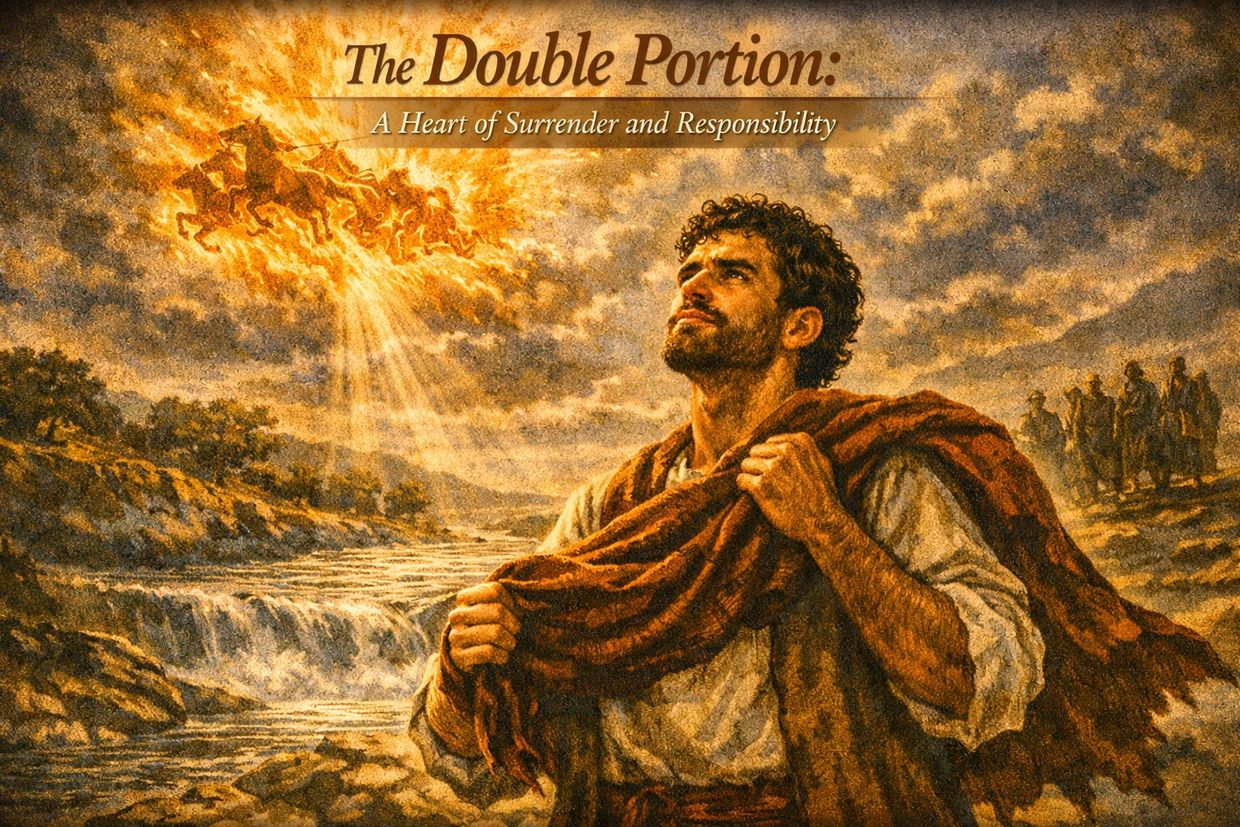
The Double Portion
The mantle rests on the one willing to carry the weight of others.
The Double Portion: A Heart of Surrender and Responsibility
The journey of Elisha and Elijah reaches its most sacred moment. The two prophets stand at the edge of the Jordan River, the threshold between mentorship and mantle, between preparation and purpose. The LORD is about to take Elijah into eternity, and Elisha’s endurance has brought him to the place where calling meets responsibility.
2 Kings 2:6-10
6 Then Elijah said to him, “Stay here, please, for the Lord has sent me on to the Jordan.”
But he said, “As the Lord lives, and as your soul lives, I will not leave you!” So the two of them went on. 7 And fifty men of the sons of the prophets went and stood facing them at a distance, while the two of them stood by the Jordan. 8 Now Elijah took his mantle, rolled it up, and struck the water; and it was divided this way and that, so that the two of them crossed over on dry ground.
9 And so it was, when they had crossed over, that Elijah said to Elisha, “Ask! What may I do for you, before I am taken away from you?”
Elisha said, “Please let a double portion of your spirit be upon me.”
10 So he said, “You have asked a hard thing. Nevertheless, if you see me when I am taken from you, it shall be so for you; but if not, it shall not be so.”
As 2 Kings 2:6–10 unfolds, Elijah performs his final miracle. He rolls up his mantle, strikes the water, and the river divides so that both men cross on dry ground. This act is more than a display of power; it is a divine seal upon Elijah’s ministry. The LORD confirms His presence with Elijah and encourages the sons of the prophets watching from afar that the work they have followed was not in vain. GOD’s authority rests upon His servant, and His faithfulness continues beyond the moment of transition.
Sometimes, we as believers need that same encouragement, a reminder that the LORD is still with us, that the work done in obedience is not forgotten. The miracle at the Jordan was GOD’s way of saying to the prophets, “Keep going. My hand is still upon you.” In every season of change, GOD’s help and salvation remain constant, just as Elisha’s name declares: “GOD helps; GOD saves.”
2 Kings 2:9
9 And so it was, when they had crossed over, that Elijah said to Elisha, “Ask! What may I do for you, before I am taken away from you?”
Elisha said, “Please let a double portion of your spirit be upon me.”
After crossing the river, Elijah turns to Elisha and asks, “Ask! What may I do for you, before I am taken away from you?” It is a tender moment between mentor and mentee, a father’s final gesture of gratitude and blessing toward his spiritual son. Elisha’s reply reveals the depth of his heart: “Please let a double portion of your spirit be upon me.”
At first glance, this request might seem ambitious, even bold. But in truth, it is profoundly selfless. Elisha is not asking for fame or power; he is asking for the birthright of the firstborn son, the portion of responsibility.
Deuteronomy 21:15-17
15 “If a man has two wives, one loved and the other unloved, and they have borne him children, both the loved and the unloved, and if the firstborn son is of her who is unloved,
16 then it shall be, on the day he bequeaths his possessions to his sons, that he must not bestow firstborn status on the son of the loved wife in preference to the son of the unloved, the true firstborn.
17 But he shall acknowledge the son of the unloved wife as the firstborn by giving him a double portion of all that he has, for he is the beginning of his strength; the right of the firstborn is his.
In Hebrew tradition, the firstborn received a double portion not for privilege, but for provision. It was given so he could care for the rest of the family, to protect them, and ensure their well‑being. Elisha’s request was a declaration of surrender: “I will take responsibility for the people of GOD. I will lead, protect, and serve them as Elijah did.”
This moment reveals Elisha’s heart as a servant and a son. He understood that the mantle was not a symbol of status but of stewardship. His desire for a double portion was not about being greater than Elijah, it was about being ready to carry the weight of ministry and the care of GOD’s people. In this, Elisha foreshadows Yeshua, the Firstborn of GOD, who took upon Himself the responsibility to redeem, protect, and provide for His brothers and sisters. Just as Elisha stood ready to serve Israel, Yeshua stands as our eternal help and salvation.
2 Kings 2:10
10 So he said, “You have asked a hard thing. Nevertheless, if you see me when I am taken from you, it shall be so for you; but if not, it shall not be so.”
Elijah’s response carries both affirmation and warning: “You have asked a hard thing.” The difficulty was not in the granting of the request, for with GOD all things are possible, but in the weight of what Elisha was asking to bear. Elijah reminds him that the calling will require complete dependence on the LORD. The double portion is not a gift of ease; it is a mantle of endurance, humility, and faith.
Elijah also acknowledges that the fulfillment of Elisha’s request rests entirely in GOD’s hands: “If you see me when I am taken from you, it shall be so for you.” The transfer of anointing is not man‑made; it is divine. The calling, the empowerment, and the provision all come from the LORD alone.
This passage speaks powerfully to each of us today. It teaches that:
- Ministry begins with surrender. True calling flows from a selfless heart willing to serve others.
- Help comes from the LORD. Only His strength sustains the work He assigns.
- Dependence is essential. Every step of ministry and daily life must rest on His grace.
- Mercy and compassion define leadership. Those who carry the mantle must care for others as family.
- Responsibility is sacred. Each believer is called to help, protect, and lead others toward GOD’s salvation in Yeshua.
This teaching closes with a promise from 2 Corinthians 9:8:
“And GOD is able to make all grace abound toward you, that you, always having all sufficiency in all things, may have an abundance for every good work.”
When GOD calls, He also equips. He provides grace, strength, and sufficiency for every good work. The same GOD who empowered Elisha to carry the mantle will empower His people today to fulfill their purpose.
No matter where the journey leads, whether at the beginning of calling or standing at the Jordan, the LORD remains faithful. For those who, like Elisha, carry a heart of surrender and responsibility, GOD will give exactly what is needed, when it is needed, and never too little or too much.
He is still our help. He is still our salvation.
Jump to the top of the page
Click the link below to return to the Elisha Series home
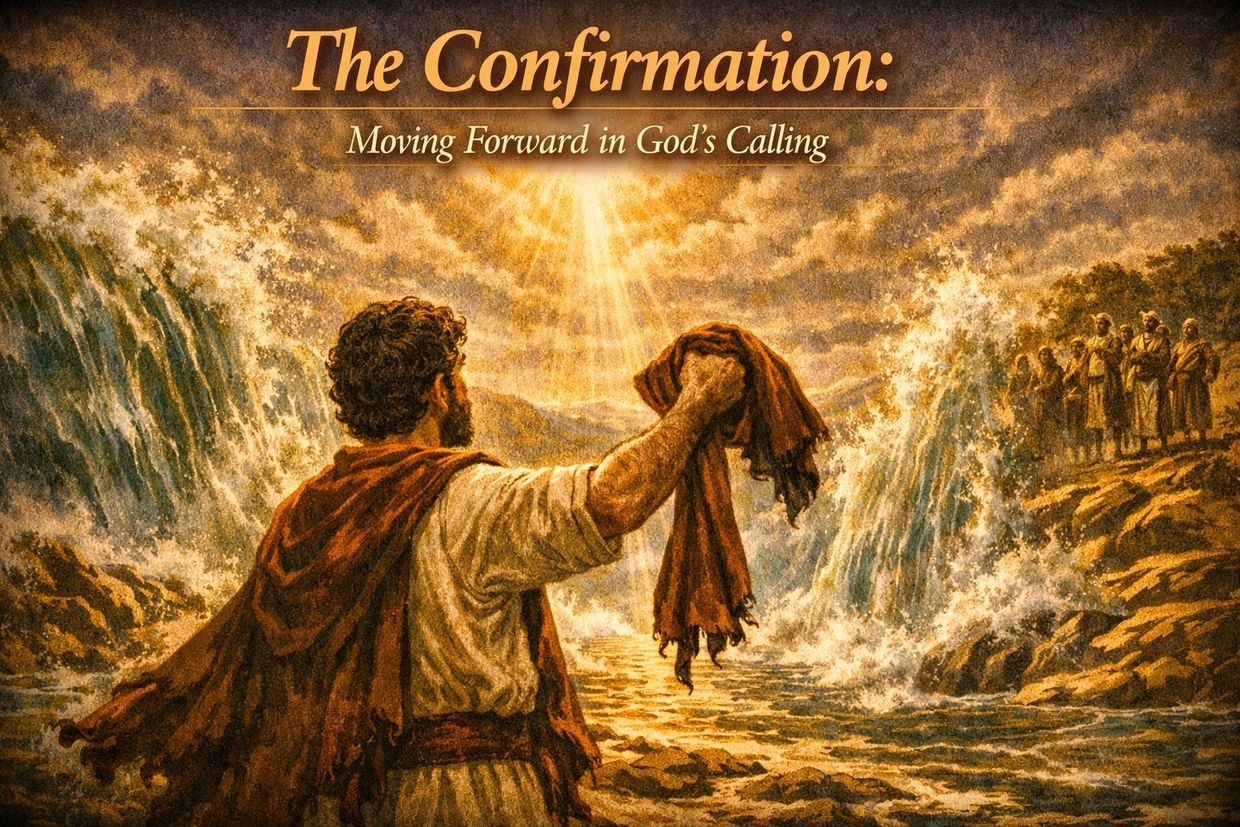
The Confirmation: Moving Forward in God’s Calling
The LORD’s confirmation breaks grief and awakens purpose.
The Confirmation: Moving Forward in GOD’s Calling
What a journey the LORD has led us through to this point. In the first five teachings of the Elisha Series, He has shown how to respond when He calls, how to serve with humility, how to surrender to His purpose, and how He supplies everything needed to accomplish His work. Now, the story turns to the moment when Elisha steps fully into his calling, the first miracle that confirms the mantle he carries.
2 Kings 2:9-14
9 And so it was, when they had crossed over, that Elijah said to Elisha, “Ask! What may I do for you, before I am taken away from you?”
Elisha said, “Please let a double portion of your spirit be upon me.”
10 So he said, “You have asked a hard thing. Nevertheless, if you see me when I am taken from you, it shall be so for you; but if not, it shall not be so.” 11 Then it happened, as they continued on and talked, that suddenly a chariot of fire appeared with horses of fire, and separated the two of them; and Elijah went up by a whirlwind into heaven.
12 And Elisha saw it, and he cried out, “My father, my father, the chariot of Israel and its horsemen!” So he saw him no more. And he took hold of his own clothes and tore them into two pieces. 13 He also took up the mantle of Elijah that had fallen from him, and went back and stood by the bank of the Jordan. 14 Then he took the mantle of Elijah that had fallen from him, and struck the water, and said, “Where is the Lord GOD of Elijah?” And when he also had struck the water, it was divided this way and that; and Elisha crossed over.
As 2 Kings 2:9–13 unfolds, Elijah and Elisha walk together one last time. A fiery chariot and horses descend from heaven, separating them, and Elijah is taken up by a whirlwind into eternity. The scene is sudden, dramatic, and deeply emotional. Elisha cries out, “My father, my father, the chariot of Israel and its horsemen!” His words reveal both grief and reverence. Elijah was not only his mentor but his spiritual father, the protector of Israel, the defender of truth. In anguish, Elisha tears his clothes, a traditional expression of mourning and sorrow.
Yet even in this moment of loss, GOD’s mercy shines through. The LORD sends a confirmation; the very sign Elijah had spoken of. Elisha sees his mentor taken up, fulfilling the promise that if he witnessed it, the double portion would be his. The confirmation comes precisely when Elisha needs it most, lifting him out of grief and refocusing him on his purpose. GOD’s timing is perfect; His confirmations arrive not to comfort emotion alone, but to propel His servants forward.
Elisha rises, takes up Elijah’s mantle, and stands at the bank of the Jordan. The act of picking up the mantle is symbolic in that it marks the transition from preparation to activation. By lifting it, Elisha declares, “Here I am, LORD. I understand Your confirmation, and I am ready to walk in Your calling.” The moment of sorrow becomes the doorway to destiny.
2 Kings 2:14-16
14 Then he took the mantle of Elijah that had fallen from him, and struck the water, and said, “Where is the Lord GOD of Elijah?” And when he also had struck the water, it was divided this way and that; and Elisha crossed over.
15 Now when the sons of the prophets who were from Jericho saw him, they said, “The spirit of Elijah rests on Elisha.” And they came to meet him, and bowed to the ground before him. 16 Then they said to him, “Look now, there are fifty strong men with your servants. Please let them go and search for your master, lest perhaps the Spirit of the Lord has taken him up and cast him upon some mountain or into some valley.”
And he said, “You shall not send anyone.”
Then comes the first miracle. 2 Kings 2:14–15 records that Elisha strikes the water with the mantle and cries, “Where is the LORD GOD of Elijah?” The river divides, and he crosses over. The same power that parted the waters for Elijah now flows through Elisha. This miracle carries two profound meanings. First, it confirms to Elisha that the LORD is with him, that the calling is real and the anointing has been transferred. Second, it confirms to the fifty sons of the prophets watching from afar that GOD’s work continues. The spirit of Elijah now rests upon Elisha.
These fifty prophets had followed Elijah’s ministry closely. They had seen his miracles, heard his teachings, and knew that the LORD was taking him away. They likely wondered what would happen next, who would lead, who would teach, how the ministry would continue. In one divine moment, all their questions are answered. The LORD Himself provides the confirmation. The mantle has passed, the calling remains, and His plan moves forward.
This miracle reminds all of us today that GOD still confirms His word. He reassures us that His promises stand firm, even when circumstances shift. The confirmation of the LORD brings hope, direction, and peace. It reminds us that He is in the middle of every transition, and His purposes never fail.
Elisha’s humility also speaks volumes. He does not announce his new role or boast of his anointing. He simply acts in obedience, and GOD’s confirmation speaks for itself. In ministry and in life, the same principle holds true, we do not need to proclaim our calling; the LORD will confirm it through His works. When we remain surrendered and humble, His presence will make it evident.
In this new era of ministry, believers must resist the temptation to draw attention to themselves. The focus must always remain on GOD alone. When He works through His people, the glory belongs entirely to Him. The confirmation of the LORD is not for self‑promotion but for the strengthening of others, to give hope, to reveal His help, and to show His salvation.
Let's close this teaching with a promise from Mark 16:20:
“And they went out and preached everywhere, the Lord working with them and confirming the word through the accompanying signs. Amen.”
Just as the LORD confirmed His word through the disciples, He continues to confirm His direction in the lives of His people today. Whether through signs, peace, provision, or timing, His confirmation always comes. The key is to wait for it, recognize it, and move when He speaks.
When the confirmation arrives, do not hesitate. Rise, take up the mantle, and move forward. The same GOD who confirmed Elisha’s calling will confirm yours.
His word stands, His promises endure, and His help remains constant.
Jump to the top of the page
Click the link below to return to the Elisha Series home
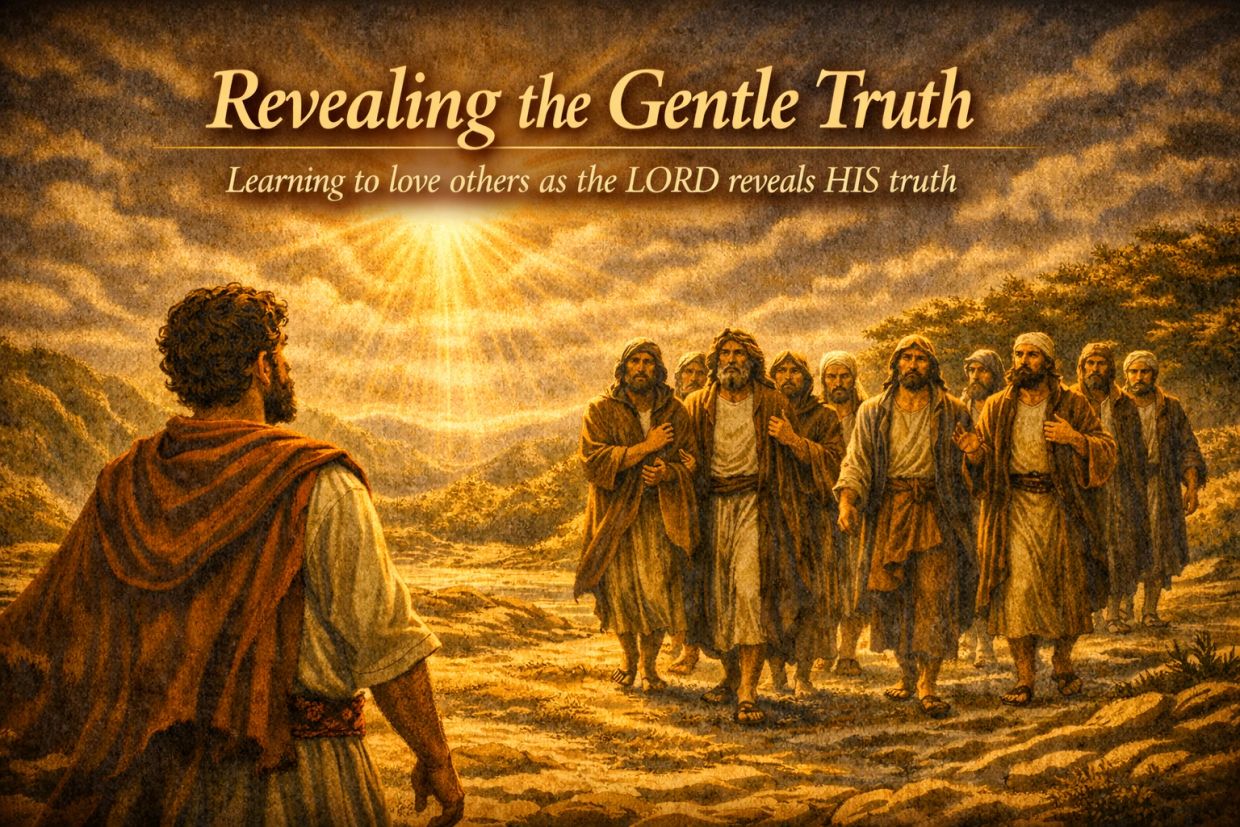
Revealing the Gentle Truth
“Truth shared gently gives others the space to discover what the Lord is revealing to them.”
2 Kings 2:15-18
15 Now when the sons of the prophets who were from Jericho saw him, they said, “The spirit of Elijah rests on Elisha.” And they came to meet him, and bowed to the ground before him.
16 Then they said to him, “Look now, there are fifty strong men with your servants. Please let them go and search for your master, lest perhaps the Spirit of the Lord has taken him up and cast him upon some mountain or into some valley.”
And he said, “You shall not send anyone.”
17 But when they urged him till he was ashamed, he said, “Send them!” Therefore they sent fifty men, and they searched for three days but did not find him.
18 And when they came back to him, for he had stayed in Jericho, he said to them, “Did I not say to you, ‘Do not go’?”
When the sons of the prophets in Jericho saw Elisha standing where Elijah had once stood, they immediately recognized that something had shifted. Scripture tells us they said, “The spirit of Elijah rests on Elisha,” and they bowed before him in honor. These were not untrained men; they were students of the prophetic, men who had been taught to discern the movements of God. They could clearly see that the authority and anointing Elijah carried had now come upon Elisha. They recognized the mantle, the power, and the divine confirmation resting on him.
Yet even with all their training, they still did not fully understand what had happened. Earlier that same day, these men had told Elisha that the Lord was going to take Elijah from him. They knew something supernatural was coming, but they didn’t know the details. Elisha, however, knew exactly what had taken place because he had witnessed it with his own eyes. He had walked with Elijah to the very moment the chariot of fire appeared. He had seen Elijah taken up. The sons of the prophets had only heard about it; Elisha had lived it.
This is where the story becomes especially meaningful for us. The sons of the prophets were not rebelling when they insisted on sending fifty men to search for Elijah. They weren’t challenging Elisha’s authority or doubting his word. They were responding from their limited understanding. They knew the Lord sometimes transported prophets to other locations, and they wondered if perhaps Elijah had been taken up only to be set down somewhere else. Out of deep respect for Elijah, they wanted to make sure he wasn’t stranded, injured, or in need of help. They simply didn’t have the full picture, and they needed closure before they could move forward into the new season.
Elisha understood this. He knew they would not find Elijah, yet he also knew that forcing the issue would not help them. Sometimes what is crystal clear to us is not clear to someone else, even when they love God and are sincerely trying to understand. Elisha could have demanded that they accept his word. He could have rebuked them for doubting. Instead, he showed compassion. He gave them space to discover the truth for themselves. He allowed them to go, knowing that the journey itself would bring them the revelation they needed.
This account in GOD’s Word doesn’t just teach us how to treat others. It is also a gentle reminder for us of something we often forget: sometimes we need closure before we can move forward. There are moments when God is clearly shifting us into a new season, yet our hearts still feel tethered to what was. We may not fully understand what God is doing, or why something ended the way it did. In those moments, we must seek the Lord, surrender our assumptions, and ask Him to help us understand what we need to release. Closure is not a lack of faith but rather a doorway God uses to prepare our hearts for what comes next.
We’ve all been in situations where we tried to explain something we knew was right, yet the other person simply couldn’t see it. When we push too hard, we risk damaging the relationship or creating unnecessary conflict. But when we share truth gently and give people time to process it with the Lord, we honor their journey. Elisha modeled this beautifully. He stepped into their perspective, understood their need for closure, and allowed God to reveal the truth in His timing.
When the men returned three days later, exhausted and empty‑handed, Elisha’s response, “Didn’t I tell you not to go?”, was not an “I told you so.” It was a gentle reminder that the truth they now understood was the same truth he had tried to share earlier. It helped settle their hearts. It gave them peace. It allowed them to release the old season and step into the new one with confidence.
This is exactly how Yeshua ministers to us. He does not force Himself upon us or pressure us into revelation. He teaches us through His Word and His Spirit, and then He patiently waits for us to see what He has been showing us all along. When we finally understand, He does not shame us for taking time. He reassures us, strengthens us, and invites us forward.
As we step into our own new season, this posture becomes essential. There are many hurting people around us. There are people who love the Lord but have been wounded, misled, or confused. Their hearts are tender, and pressure only pushes them further away. But when we ask the Holy Spirit for discernment, He shows us where people are in their journey so we can respond with compassion instead of frustration. Our role is not to force truth on anyone. Our role is to share truth, pray for understanding, and gently encourage those who are receiving revelation so they can move forward in freedom.
If we follow the example God gives us through Elisha, the people we encounter will not only hear truth—they will experience the God who saves and the God who helps. And as Proverbs 15:1 reminds us, “A soft answer turns away wrath, but a harsh word stirs up anger.” In this season, may our words be soft, our hearts be patient, and our love be a reflection of the One who leads us with gentleness. We pray that you find whatever closure you may need in this season so you can continue to move forward into the blessings the LORD has for you.
Jump to the top of the page
Click the link below to return to the Elisha Series home
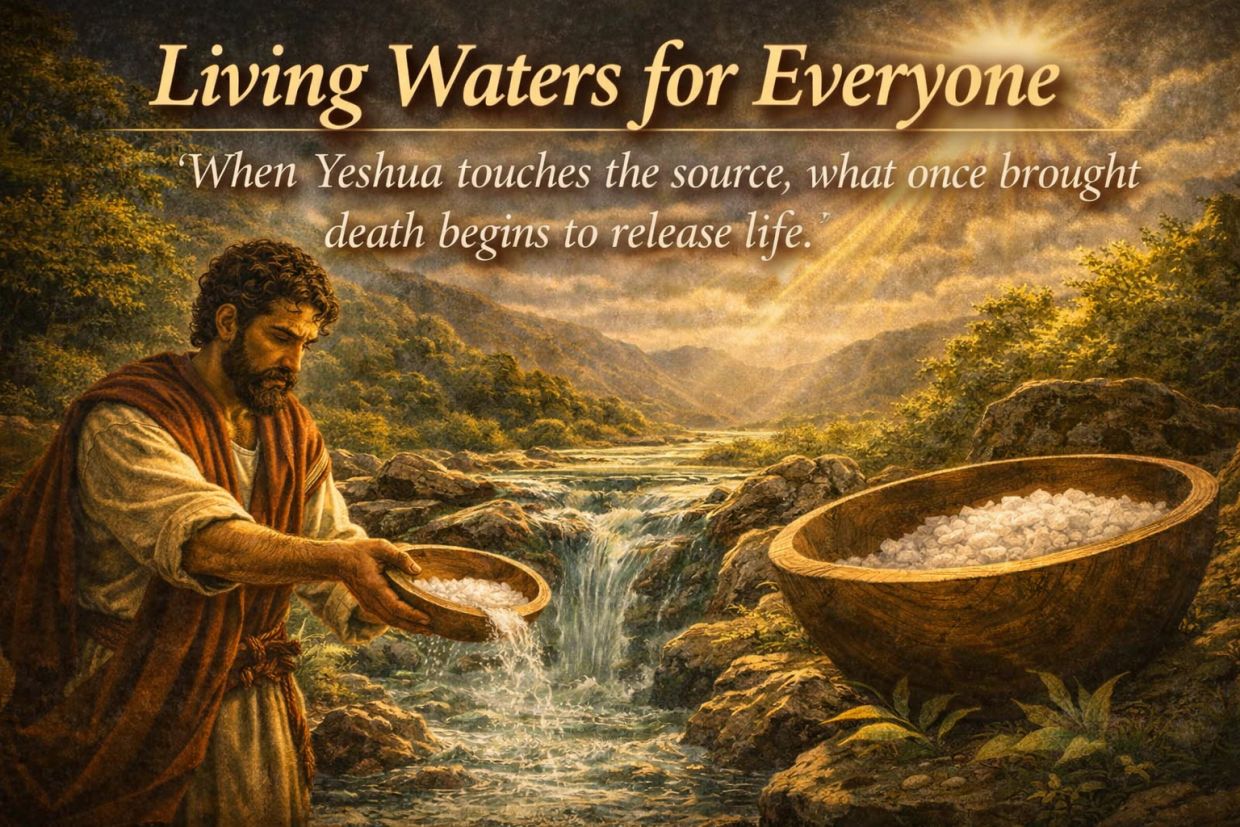
Living Waters for Everyone
“When Yeshua touches the source, what once brought death begins to release life.”
There are seasons in our walk with GOD when He gently invites us to pause and take an honest look at the condition of our lives. Not the outward appearance that others see, but the inner places where the real battles are fought and the real fruit is formed. As we continue following the life of Elisha, we arrive at a moment that speaks directly to those hidden places. It is a moment where GOD reveals His desire to heal the source so that everything flowing from it can live again.
2 Kings 2:19-22
19 Then the men of the city said to Elisha, “Please notice, the situation of this city is pleasant, as my lord sees; but the water is bad, and the ground barren.”
20 And he said, “Bring me a new bowl, and put salt in it.” So they brought it to him. 21 Then he went out to the source of the water, and cast in the salt there, and said, “Thus says the Lord: ‘I have healed this water; from it there shall be no more death or barrenness.’ ” 22So the water remains healed to this day, according to the word of Elisha which he spoke.
The story opens in Jericho, a city that appeared beautiful and prosperous. Jericho had a nice warm climate, the soil was rich with minerals, and the location was ideal because it rested along a major trade route. It appeared as though it had everything it needed. By every outward measure, Jericho should have been thriving. Yet beneath the surface, something was terribly wrong. The water was contaminated, and the land was barren. What looked pleasant on the outside was quietly dying on the inside.
Many people today know exactly what that feels like. We learn how to smile, how to function ion our families and in society. We adapt our lives so we can keep moving and appear strong, yet all the time, deep inside, something is off. Something is hurting, barren, and is quietly poisoning the flow of life. And just like the people of Jericho, we often carry it alone until the weight becomes too heavy.
The men of the city did something courageous and admitted the truth. They acknowledged that things were not as perfect as they appeared. They came to Elisha and said, in essence, “We need help.” That moment of honesty opened the door for transformation. GOD always responds to humility. He always meets truth with healing.
Elisha’s response was simple. He asked for a new bowl and some salt. These were not random objects. They were prophetic symbols pointing to the deeper work GOD desires to do in every life.
A new bowl represents purity, consecration, and a vessel untouched by corruption. This is a direct picture of Yeshua, the One who carries the fullness of GOD’s covenant without stain or compromise. Salt represents covenant itself. It speaks of permanence, preservation, loyalty, and incorruptibility. A covenant of salt is a covenant that cannot decay.
When Elisha combined the new bowl with the salt and cast it into the poisoned spring, everything changed. The source that once produced death began to produce life. The place that had caused barrenness became fruitful again. What had carried a curse now carried blessing. This is exactly what Yeshua does in the human heart. He heals the source. He restores what was poisoned. He brings life where death once ruled.
John 7:37-39
37 On the last day, that great day of the feast, Jesus stood and cried out, saying, “If anyone thirsts, let him come to Me and drink. 38 He who believes in Me, as the Scripture has said, out of his heart will flow rivers of living water.” 39 But this He spoke concerning the Spirit, whom those believing in Him would receive; for the Holy Spirit was not yet given, because Jesus was not yet glorified.
Yeshua later stood in Jerusalem and cried out, “If anyone thirsts, let him come to Me and drink.” He promised that those who believe in Him would become vessels from which rivers of living water would flow. This is not just poetic language. It is the destiny of every believer. GOD does not simply want to heal you. He wants to fill you. He wants to make you a living, mobile temple from which His Spirit flows to others.
Ezekiel 47:1
1Then he brought me back to the door of the temple; and there was water, flowing from under the threshold of the temple toward the east, for the front of the temple faced east; the water was flowing from under the right side of the temple, south of the altar.
Ezekiel saw a vision of water flowing from the threshold of the temple, bringing life wherever it went. That river is a picture of what GOD desires to release through your life. When the Holy Spirit fills you, you become part of the fulfillment of that prophetic picture. You become a carrier of living water into barren places.
This portion of Elisha’s story carries a powerful invitation. GOD wants to heal the part of you that has been quietly poisoning your life. GOD wants to restore the source so your whole life can flourish again. HE wants to make you a new vessel that can carry His covenant into every barren place and turn your hidden pain into visible fruitfulness. GOD wants to remove the curse and release blessing where there has been loss.
This is the heart of the Elisha’s ministry. This is the heart of Yeshua. This is the heart of GOD for you. He saves. He heals. He helps. And then He sends you out to carry that same help to others.
This is GOD’s salvation. This is GOD’s help. This is His Elisha moment for your life.
Let the living waters flow again.
We pray this word blesses you. Take time to ask the LORD to examine your heart and your life. Ask HIM to show you anything that may be barren, or unfruitful and ask HIM to save you and help you in that area. We pray the LORD ministers to you as only HE can. If you would like someone to pray for you please write to us and we will be happy to pray for you in your journey with Yeshua.
Living Water Passages to Explore:
Throughout the Word of GOD, the theme of living water appears again and again, flowing like a thread from Genesis to Revelation. It is one of the most consistent pictures GOD uses to reveal His heart, His covenant, and His desire to bring life where death once ruled.
For your own time of reflection and personal ministry with Holy Spirit, we have gathered a complete list of the living water passages found in Scripture. Each one carries a unique glimpse of Yeshua and the way He saves, heals, restores, and sustains His people.
As you read through these verses, take a moment to slow down and invite the LORD to speak to you. Ask Him to show you how each passage applies to your life in this season and what He desires to refresh, renew, or awaken within you.
Complete List of “Living Water / River of God” Passages
Torah / Writings
- Genesis 2:10–14
- Psalm 1:3
- Psalm 36:8–9
- Psalm 46:4
- Psalm 65:9
- Psalm 104:10–13
- Proverbs 18:4
Prophets
- Isaiah 12:3
- Isaiah 32:2
- Isaiah 35:6–7
- Isaiah 41:17–18
- Isaiah 44:3
- Isaiah 55:1
- Jeremiah 2:13
- Jeremiah 17:13
- Ezekiel 36:25–27
- Ezekiel 47:1–12
- Joel 3:18
- Zechariah 13:1
- Zechariah 14:8
New Testament
- John 4:10–14
- John 6:35
- John 7:37–39
- Revelation 7:17
- Revelation 21:6
- Revelation 22:1–2
- Revelation 22:17
Jump to the top of the page
Click the link below to return to the Elisha Series home
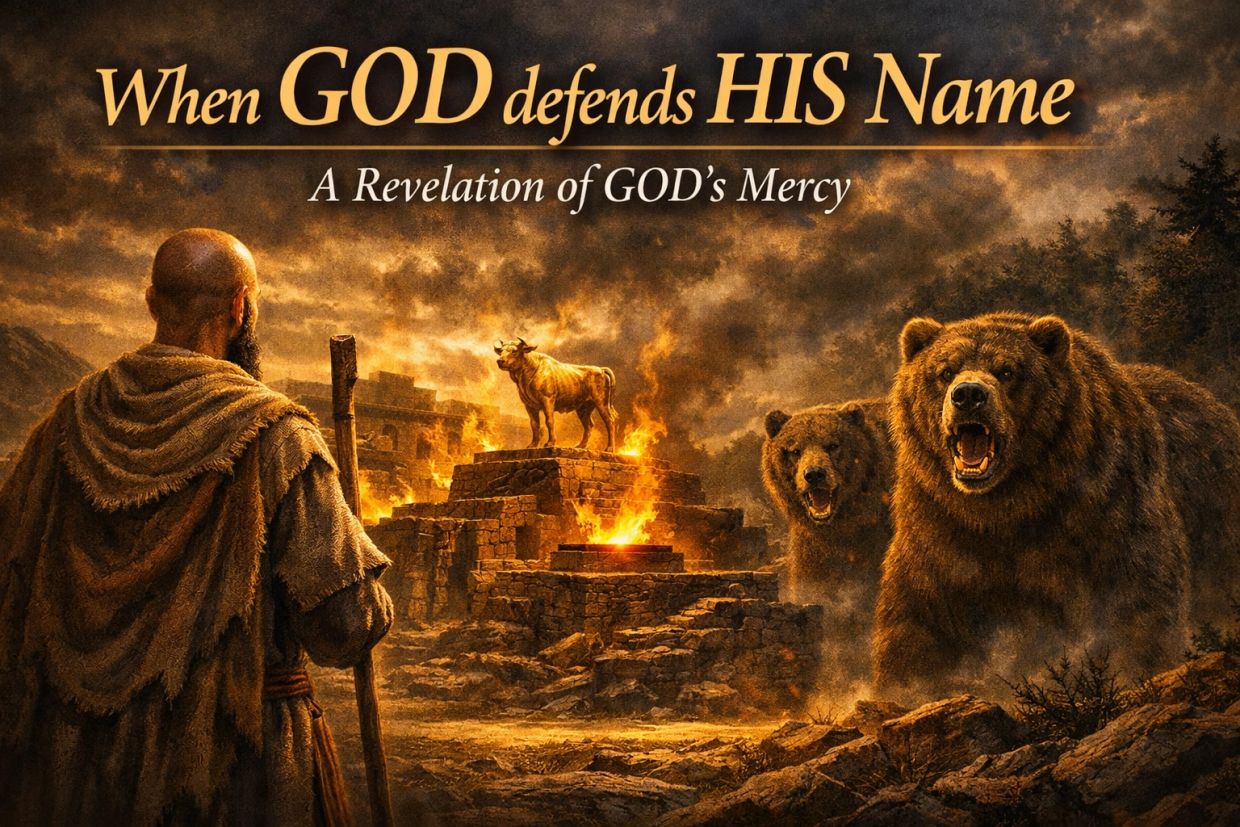
When GOD Defends His Name
“The bears were not a picture of GOD’s anger. They were a revelation of His love, His authority, and His desire to save His people from deception.”
The passage we are stepping into today can feel unsettling at first glance. It seems to stand in complete contradiction to the meaning of Elisha’s name, which means God Saves and GOD Helps. Many people read it quickly, feel uncomfortable, and move on without ever pausing to ask what is actually happening. I did the same for years. Then one day the LORD opened my understanding, and what once felt troubling became one of the clearest pictures of GOD’s mercy, help, and salvation in Elisha’s entire ministry. My hope is that as you walk through this with me, the same clarity and joy will rise in your heart as well.
If you have been following this series, you already know where we are headed next. Let us look at the passage together.
2 Kings 2:23-25
23 Then he went up from there to Bethel; and as he was going up the road, some youths came from the city and mocked him, and said to him, “Go up, you baldhead! Go up, you baldhead!”
24 So he turned around and looked at them, and pronounced a curse on them in the name of the Lord. And two female bears came out of the woods and mauled forty-two of the youths.
25 Then he went from there to Mount Carmel, and from there he returned to Samaria.
At first reading, this moment feels harsh. None of us enjoy imagining GOD responding with such severity. Because of that discomfort, we often avoid digging deeper. Yet when we do, we discover that this passage is not a contradiction of GOD’s character. It is one of the strongest demonstrations of His mercy and His desire to save His people.
To understand what is happening, we need to slow down and ask the right questions. Whenever you read Scripture, it is important to ask the LORD what is really taking place, who is involved, what the culture was like, and who the passage was originally written to. These questions open the door to deeper understanding.
Where did this happen?
This moment took place in Bethel. That detail matters more than we often realize. Bethel was the center of Israel’s idol worship. It was the headquarters of King Jeroboam’s false religion. One of the golden calves stood there. A counterfeit priesthood operated there. A counterfeit altar stood there. GOD’s prophets were routinely opposed there. Bethel was the heart of a state sponsored anti JEHOVAH religion.
When Elisha walked into Bethel, he was not simply entering a city. He was stepping into the stronghold of a rival worship system. It was similar to Moses walking into the court of Pharaoh. Everything about Bethel was designed to resist the authority of the LORD.
Who was involved?
Elisha was the anointed messenger of GOD. He carried the authority of GOD and represented GOD’s presence among His people.
The group that confronted him is often misunderstood. The Hebrew phrase used here does not refer to small children. It refers to young men, servants, military trainees, and adolescents old enough to form organized gangs. This was a large, hostile mob. They were not innocent children teasing a prophet. They were a coordinated group of young men shaped by a culture of idolatry and rebellion.
What were they actually saying?
Their words, “Go up, you baldhead,” were not about Elisha’s appearance. They were mocking the way GOD had taken Elijah up into heaven. They were saying, in essence, “We did not want Elijah or his message, and we do not want you either. Why do you not disappear like he did.”
This was not a rejection of Elisha. It was a rejection of GOD Himself. They were declaring openly that they rejected GOD’s prophet, GOD’s authority, and GOD’s call to return to Him. They were saying they preferred their idolatry, their false religion, and their worldly ways. They did not want GOD interrupting their city.
What was happening in the bigger picture?
Imagine if GOD had done nothing in that moment. The entire city would have watched His prophet be mocked and threatened without any response from heaven. They would have concluded that GOD was powerless. In their eyes He would have appeared no different from the lifeless idols they worshiped.
GOD needed to defend His name, His honor, and His authority. This moment was Elisha’s Mount Carmel. Just as GOD revealed Himself through Elijah to turn the hearts of the people, He was now revealing Himself again through Elisha. This was an act of mercy. GOD wanted His people to know that He was real, powerful, and in control. He wanted to break the deception that had blinded them. He wanted to show them that He was the only true and living GOD.
This was not an act of cruelty. It was an act of salvation. GOD was giving the people of Bethel a chance to see the truth and return to Him.
What does this mean for us today?
The LORD is speaking the same message to us. With everything happening in the world, GOD has every right to bring judgment immediately. People often ask why He has not returned yet or why He allows evil to continue. The answer is mercy. His return will signal the end and the final judgment. He is giving as much time as possible for people to see their ways, repent, and turn to Him.
Think about your own life. What if the LORD had returned before you came to salvation. Where would you be. Now think of the countless people who are where you once were. Should they not be given the same opportunity the LORD gave you.
If you have not made that commitment yet, or if you have been wrestling with your faith, do not wait. Tomorrow is not promised.
What happened to Bethel?
I wish I could say that Bethel repented after witnessing this moment, but Scripture records no such change. Bethel remained a center of idolatry and false worship. Eventually it was destroyed because of its rebellion. This stands as a sobering picture of what happens when people reject the mercy of GOD. When the LORD returns, the time for repentance will be over.
How is GOD helping us through this passage?
He is calling us to learn from Bethel. He is inviting us to acknowledge Him as LORD and KING. He is urging us to turn from every form of idolatry and return to Him while there is still time. He is reminding us that He alone has the power to deliver us from every oppression and every tactic of the enemy. He is assuring us that He will defend His name in us just as He defended His name through Elisha. Even if the enemy sends an entire mob of spiritual forces against you, GOD will defend you.
This is why Isaiah 54 verse 17 is so powerful.
Isaiah 54:17
17 No weapon formed against you shall prosper,
And every tongue which rises against you in judgment
You shall condemn.
This is the heritage of the servants of the Lord,
And their righteousness is from Me,”
Says the Lord.
This is a covenant promise. As you seek the LORD and serve Him, He will defend you. He will defeat your adversaries. He will silence your accusers. You will not have to fight in your own strength. You will stand and watch as the LORD fights for you.
This is the hope and encouragement this passage offers. The same GOD who defended His name in Bethel is the same GOD who defends His name in you. He is here to save you. He is here to help you. And He is faithful to finish what He has begun in your life.
Jump to the top of the page
Click the link below to return to the Elisha Series home
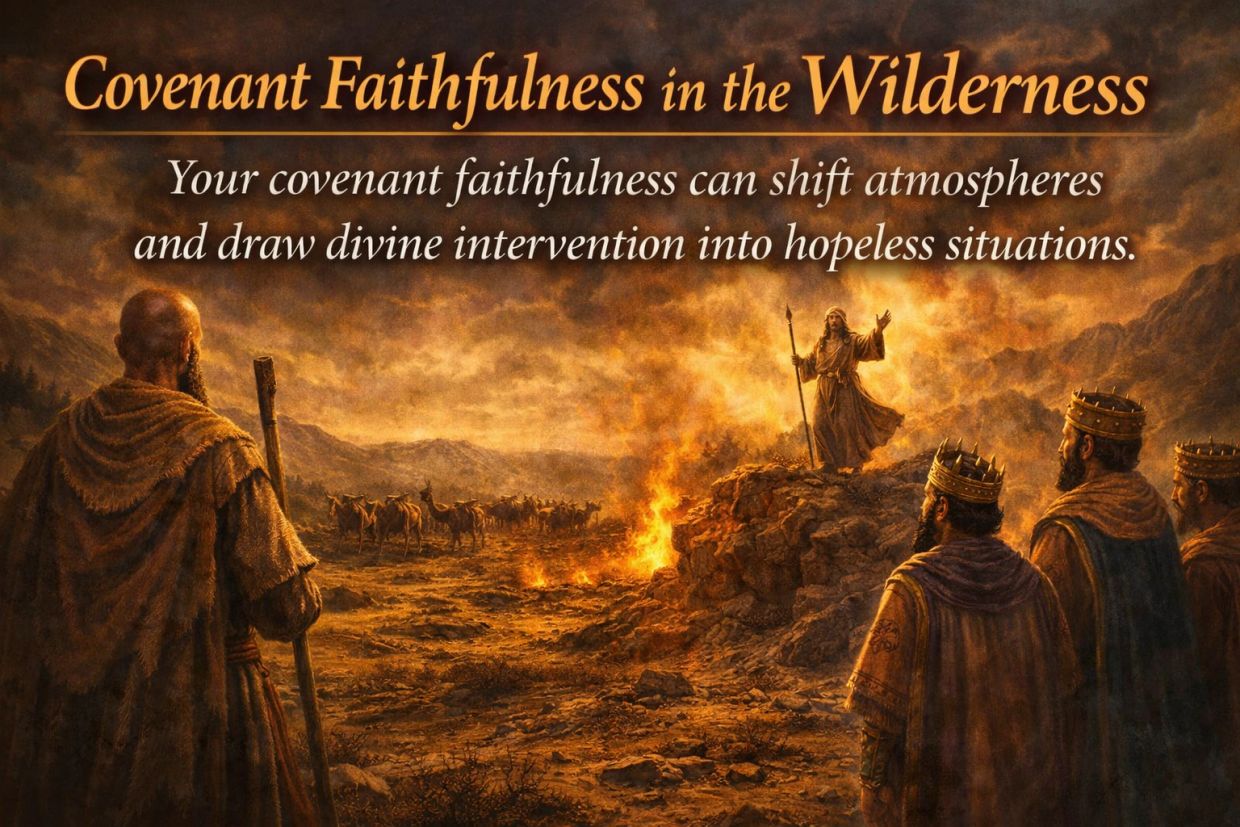
The Covenant Gate
How One Heart Opens the Way for GOD’s Help and GOD’s Salvation
“Your covenant faithfulness can open gates of mercy and draw divine intervention into hopeless places.”
Please read all of 2 Kings 3:1-27 as the foundation for this teaching. We will focus on a few key verses in the teaching, but to get the full understanding read the entire passage.
2 Kings 3:1-3
1 Now Jehoram the son of Ahab became king over Israel at Samaria in the eighteenth year of Jehoshaphat king of Judah, and reigned twelve years. 2 And he did evil in the sight of the Lord, but not like his father and mother; for he put away the sacred pillar of Baal that his father had made. 3 Nevertheless he persisted in the sins of Jeroboam the son of Nebat, who had made Israel sin; he did not depart from them.
The story of 2 Kings 3 unfolds during a time of spiritual instability in Israel. Jehoram, the son of Ahab and Jezebel, sat on the throne, and although he attempted to distance himself from the worst of his parents’ idolatry, the nation still carried the residue of their rebellion. Moab, ruled by King Mesha, had long been under Israel’s control and paid a heavy tribute of wool each year. When Ahab died, Mesha saw an opportunity to break free from Israel’s authority, and he rebelled. This act of defiance created a political and military crisis that drew three kings into the wilderness: Jehoram of Israel, Jehoshaphat of Judah, and the king of Edom.
The three kings chose a southern route through the wilderness of Edom, a harsh and unforgiving landscape. After seven days of marching, they ran out of water. The armies were exhausted, the animals were collapsing, and the mission was on the verge of failure. In the middle of this crisis, Jehoram panicked and assumed that GOD had brought them out only to destroy them. Yet in that moment of fear and confusion, one voice rose above the rest. Jehoshaphat, the king of Judah, asked the question that no one else had considered. He asked if there was a prophet of the LORD among them.
2 Kings 3:11-12
11 But Jehoshaphat said, “Is there no prophet of the Lord here, that we may inquire of the Lord by him?”
So one of the servants of the king of Israel answered and said, “Elisha the son of Shaphat is here, who poured water on the hands of Elijah.”
12 And Jehoshaphat said, “The word of the Lord is with him.” So the king of Israel and Jehoshaphat and the king of Edom went down to him.
This simple question changed everything. It revealed the heart of a man who walked in covenant with GOD. Jehoshaphat’s instinct was to seek the LORD, even when the situation looked hopeless. His covenant faithfulness opened the door for divine intervention.
2 Kings 3:13-14
13 Then Elisha said to the king of Israel, “What have I to do with you? Go to the prophets of your father and the prophets of your mother.”
But the king of Israel said to him, “No, for the Lord has called these three kings together to deliver them into the hand of Moab.”
14 And Elisha said, “As the Lord of hosts lives, before whom I stand, surely were it not that I regard the presence of Jehoshaphat king of Judah, I would not look at you, nor see you.
When Elisha arrived, he made it clear that he had no regard for Jehoram and no interest in the king of Edom. He declared that he would not even look at them if Jehoshaphat were not present. GOD honored the one who honored Him, and because of Jehoshaphat’s covenant walk, the word of the LORD came forth.
Through one righteous heart, GOD released mercy to those who had not sought Him. Israel had not repented. Edom had not prayed. Moab certainly did not fear GOD. Yet GOD sent help because Jehoshaphat stood before Him in covenant faithfulness. The miracle that followed was not the result of Israel’s righteousness but of Judah’s devotion. It was the overflow of one man’s walk with GOD.
This truth carries a powerful message for us today. Your walk with GOD matters more than you realize. Your covenant faithfulness can shift atmospheres, open gates, and draw divine intervention into situations that seem hopeless. GOD still honors those who honor Him. He still releases mercy because of the faithful and pours out help and salvation through the covenant lives of His people.
Ultimately, Jehoshaphat points us to the Greater King, Yeshua. Through His perfect obedience and covenant faithfulness, salvation flows to the undeserving. Because He stands before the Father, mercy reaches those who are far from GOD. The GOD who helped Israel in the wilderness is the same GOD who saves us through Yeshua. This is the heart of what the name Elisha means; GOD helps. GOD saves.
Jump to the top of the page
Click the link below to return to the Elisha Series home
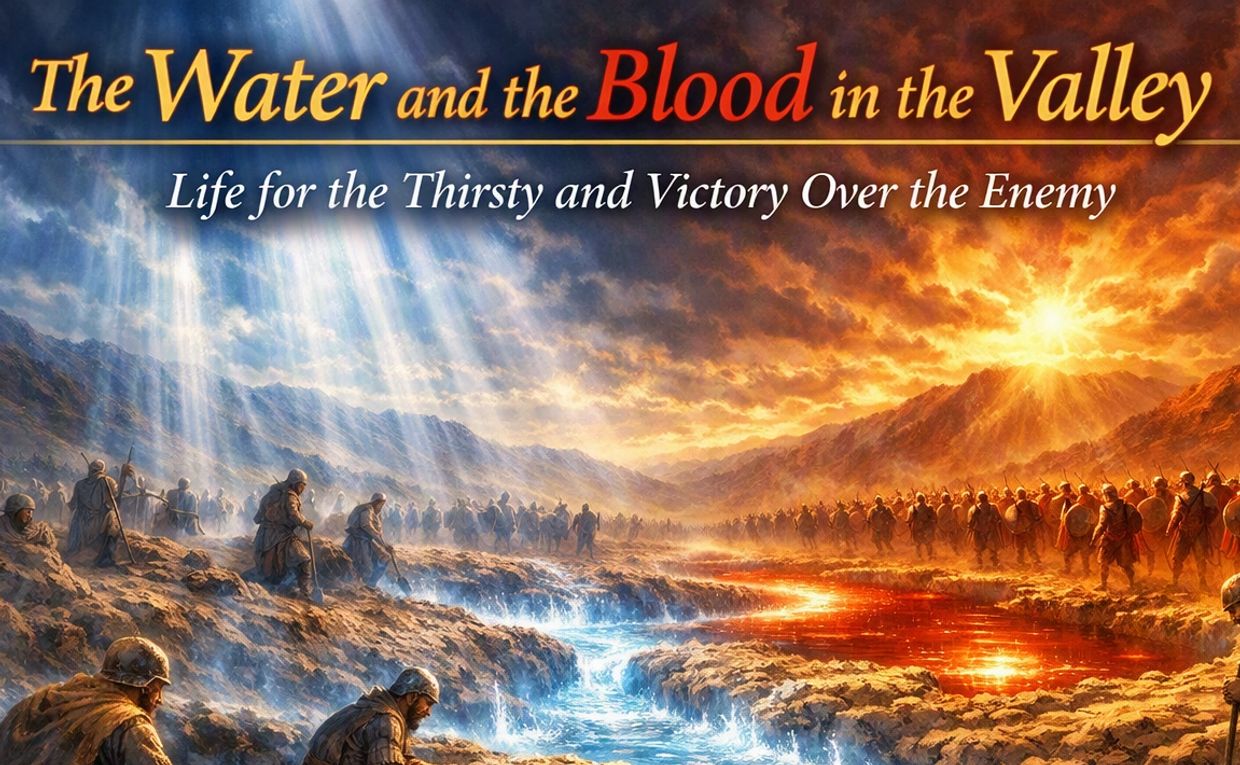
The Water and the Blood in the Valley
“Faith digs trenches in dry valleys, and the Spirit fills them with covenant life.”
Life for the Thirsty and Victory Over the Enemy
Please read all of 2 Kings 3:1-27 as the foundation for this teaching. We will focus on a few key verses in the teaching, but to get the full understanding read the entire passage.
After the word of the LORD came through Elisha, the armies still stood in a barren valley with no water in sight. The ground was dry, the soldiers were fainting, and the situation appeared hopeless. Yet GOD gave a command that seemed completely unreasonable. He told them to dig trenches throughout the valley. There were no clouds in the sky and no sign of rain, yet GOD asked them to prepare for an outpouring that had no natural explanation.
The act of digging trenches in a dry valley was an expression of faith. It was covenant partnership. GOD asked them to make room for what He intended to send. They dug into hard ground, believing that GOD would fill what they prepared. This is the nature of faith. It acts before it sees. It obeys before it understands. It prepares for what GOD has promised even when the environment offers no encouragement.
By morning, the valley was filled with water. No storm had passed through the night. No rain had fallen. No wind had blown. Yet water flowed into the trenches from the direction of Edom. This water revived the armies, restored strength, and brought life where death had been certain. In Scripture, water is often a symbol of the Spirit, renewal, and resurrection. GOD revealed Himself as the One who brings life into barren places and help into situations that appear beyond rescue.
However, the miracle did not end with the water. As the sun rose, the Moabites looked across the valley and saw the water shimmering red. To them, it looked like blood. They assumed that the three kings had turned on one another and slaughtered themselves. Believing that victory was already theirs, they rushed into the valley without caution. Their misinterpretation became their downfall. GOD used the appearance of blood to confuse the enemy and secure victory for His people.
The water and the blood together reveal the dual nature of covenant. The water brought life to GOD’s people. The blood brought confusion and defeat to their enemies. The same miracle that revived Israel destroyed Moab. This is the covenant pattern. GOD gives life to the righteous and brings judgment against the adversary. He helps the thirsty and saves the faithful. He uses what He provides to strengthen His people and to confound those who oppose them.
This truth carries a powerful message for us today. GOD still asks His people to dig trenches in dry places. He still calls us to prepare for His outpouring even when the environment looks barren. He still sends water where there is no natural source. He still brings life into situations that appear hopeless. And He still uses the covenant to stand between His people and their adversaries. The blood of Yeshua still confuses the enemy. The covenant still protects GOD’s people. The Spirit still fills what we prepare.
The miracle in the valley points us to Yeshua. He is the source of living water. He is the covenant blood that defeats the enemy. He is the One who brings life to the thirsty and victory to the faithful. GOD helps. GOD saves. And He does it through the water and the blood.
Jump to the top of the page
Click the link below to return to the Elisha Series home